
Only walking for exercise? Here’s how to get the most out of it
10almonds is reader-supported. We may, at no cost to you, receive a portion of sales if you purchase a product through a link in this article.
We’re living longer than in previous generations, with one in eight elderly Australians now aged over 85. But the current gap between life expectancy (“lifespan”) and health-adjusted life expectancy (“healthspan”) is about ten years. This means many of us live with significant health problems in our later years.
To increase our healthspan, we need planned, structured and regular physical activity (or exercise). The World Health Organization recommends 150–300 minutes of moderate-intensity exercise – such as brisk walking, cycling and swimming – per week and muscle strengthening twice a week.
Yet few of us meet these recommendations. Only 10% meet the strength-training recommendations. Lack of time is one of the most common reasons.
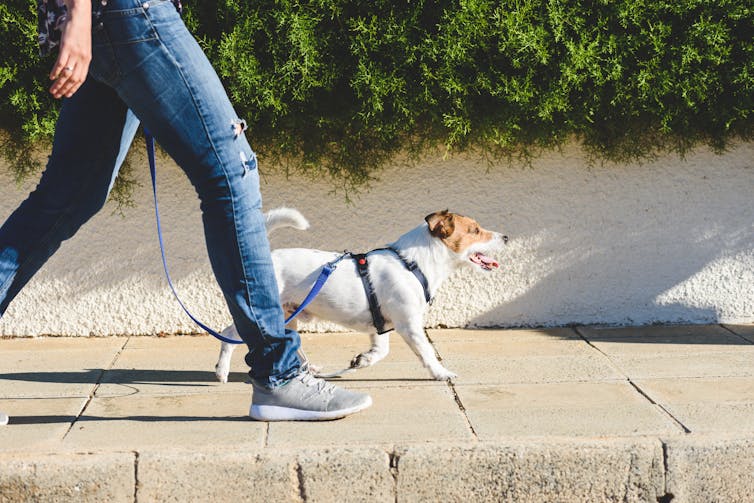
Walking is cost-effective, doesn’t require any special equipment or training, and can be done with small pockets of time. Our preliminary research, published this week, shows there are ways to incorporate strength-training components into walking to improve your muscle strength and balance.
Why walking isn’t usually enough
Regular walking does not appear to work as muscle-strengthening exercise.
In contrast, exercises consisting of “eccentric” or muscle-lengthening contractions improve muscle strength, prevent muscle wasting and improve other functions such as balance and flexibility.
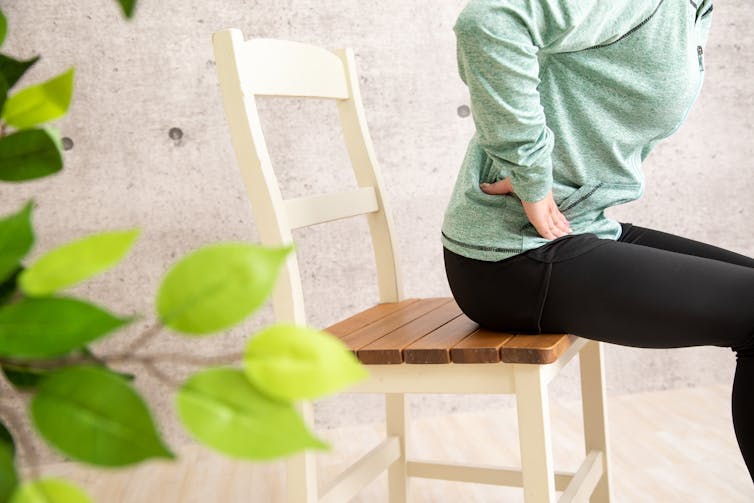
Typical eccentric contractions are seen, for example, when we sit on a chair slowly. The front thigh muscles lengthen with force generation.
buritora/Shutterstock
Our research
Our previous research found body-weight-based eccentric exercise training, such as sitting down on a chair slowly, improved lower limb muscle strength and balance in healthy older adults.
We also showed walking down stairs, with the front thigh muscles undergoing eccentric contractions, increased leg muscle strength and balance in older women more than walking up stairs. When climbing stairs, the front thigh muscles undergo “concentric” contractions, with the muscles shortening.
It can be difficult to find stairs or slopes suitable for eccentric exercises. But if they could be incorporated into daily walking, lower limb muscle strength and balance function could be improved.
This is where the idea of “eccentric walking” comes into play. This means inserting lunges in conventional walking, in addition to downstairs and downhill walking.
In our new research, published in the European Journal of Applied Physiology, we investigated the effects of eccentric walking on lower limb muscle strength and balance in 11 regular walkers aged 54 to 88 years.
The intervention period was 12 weeks. It consisted of four weeks of normal walking followed by eight weeks of eccentric walking.
The number of eccentric steps in the eccentric walking period gradually increased over eight weeks from 100 to 1,000 steps (including lunges, downhill and downstairs steps). Participants took a total of 3,900 eccentric steps over the eight-week eccentric walking period while the total number of steps was the same as the previous four weeks.
We measured the thickness of the participants’ front thigh muscles, muscle strength in their knee, their balance and endurance, including how many times they could go from a sitting position to standing in 30 seconds without using their arms. We took these measurements before the study started, at four weeks, after the conventional walking period, and at four and eight weeks into the eccentric walking period.
We also tested their cognitive function using a digit symbol-substitution test at the same time points of other tests. And we asked participants to complete a questionnaire relating to their activities of daily living, such as dressing and moving around at home.
Finally, we tested participants’ blood sugar, cholesterol levels and complement component 1q (C1q) concentrations, a potential marker of sarcopenia (muscle wasting with ageing).
alexei_tm/Shutterstock
What did we find?
We found no significant changes in any of the outcomes in the first four weeks when participants walked conventionally.
From week four to 12, we found significant improvements in muscle strength (19%), chair-stand ability (24%), balance (45%) and a cognitive function test (21%).
Serum C1q concentration decreased by 10% after the eccentric walking intervention, indicating participants’ muscles were effectively stimulated.
The sample size of the study was small, so we need larger and more comprehensive studies to verify our findings and investigate whether eccentric walking is effective for sedentary people, older people, how the different types of eccentric exercise compare and the potential cognitive and mental health benefits.
But, in the meantime, “eccentric walking” appears to be a beneficial exercise that will extend your healthspan. It may look a bit eccentric if we insert lunges while walking on the street, but the more people do it and benefit from it, the less eccentric it will become.
Ken Nosaka, Professor of Exercise and Sports Science, Edith Cowan University
This article is republished from The Conversation under a Creative Commons license. Read the original article.
Don’t Forget…
Did you arrive here from our newsletter? Don’t forget to return to the email to continue learning!

Recommended
Learn to Age Gracefully
Join the 98k+ American women taking control of their health & aging with our 100% free (and fun!) daily emails:
-
What Should (& Shouldn’t) You Do If You Cut Off A Finger?
10almonds is reader-supported. We may, at no cost to you, receive a portion of sales if you purchase a product through a link in this article.
Kitchen accidents are common, yet most severed fingers can’t be usefully reattached, because most people don’t have all the “necessaries” in order. So, how to be better-prepared than most?
You’ll want to watch this now, with (presumably) a full complement of fingers, rather than having to do a panicked internet search and finding it’s harder than you thought to unlock and use your phone with a severed finger.
Dr. Jason Hoellwarth explains:
Can it be saved?
An example of how everything can go right: Dr. Priya cleanly severs her finger at home (unintentionally, not just for our education), and:
- cleans it,
- bandages it,
- avoids ibuprofen,
- preserves the finger in a clean moist towel in a cooler,
- gets rapid surgical repair,
- completes a course of specialized physical therapy (to re-establish the brain-muscle connection via the newly connected nerves)
…thus enjoying a full recovery.
Good news: severed digits can survive a few hours* without blood supply; cooling can extend this to 6–12 hours before tissue death makes reattachment impossible.
*This is a big difference contrasted with the brain, which under normal circumstances has a 5-minute oxygen window after which currently irreversible tissue death occurs (cooling can extend this though, as is seen with people who fall into icy lakes, clinically die, and can be “brought back to life” quite a bit later because paradoxically, the hypothermia saved them).
Bad news: many hospitals lack equipment or specialists for urgent reattachments, and nerve repair is particularly difficult and rarely restores full sensation or movement.
That said, there are some modern advances that are a big help if available, for example surgically anchoring implants into bone creates a direct skeletal connection, reducing weight strain, improving comfort, and allowing some sensory feedback.
Failing that, Dr. Hoellwarth recommends getting a good prosthetic, or just opting to go on with one finger fewer.
For more on all of this, enjoy:
Click Here If The Embedded Video Doesn’t Load Automatically!
Want to learn more?
You might also like:
What is a virtual emergency department? And when should you visit one?
Take care!
Share This Post
-
CLA for Weight Loss?
10almonds is reader-supported. We may, at no cost to you, receive a portion of sales if you purchase a product through a link in this article.
Conjugated Linoleic Acid for Weight Loss?
You asked us to evaluate the use of CLA for weight loss, so that’s today’s main feature!
First, what is CLA?
Conjugated Linoleic Acid (CLA) is a fatty acid made by grazing animals. Humans don’t make it ourselves, and it’s not an essential nutrient.
Nevertheless, it’s a popular supplement, mostly sold as a fat-burning helper, and thus enjoyed by slimmers and bodybuilders alike.
❝CLA reduces bodyfat❞—True or False?
True! Contingently. Specifically, it will definitely clearly help in some cases. For example:
- This study found it doubled fat loss in chickens
- It significantly increased delipidation of white adipose tissue in these mice
- The mice in this study enjoyed a 43–88% reduction in (fatty) weight gain
- Over the course of a six-week weight-loss program, these mice got 70% more weight loss on CLA, compared to placebo
- In this study, pigs that took CLA on a high-calorie diet gained 50% less weight than those not taking CLA
- On a heart-unhealthy diet, these hamsters taking CLA gained much less white adipose tissue than their comrades not taking CLA
- Another study with pigs found that again, CLA supplementation resulted in much less weight gained
- These hamsters being fed a high-cholesterol diet found that those taking CLA ended up with a leaner body mass than those not taking CLA
- This study with mice found that CLA supplementation promoted fat loss and lean muscle gain
Did you notice a theme? It’s Animal Farm out there!
❝CLA reduces bodyfat in humans❞—True or False?
False—practically. Technically it appears to give non-significantly better results than placebo.
A comprehensive meta-analysis of 18 different studies (in which CLA was provided to humans in randomized, double-blinded, placebo-controlled trials and in which body composition was assessed by using a validated technique) found that, on average, human CLA-takers lost…
Drumroll please…
00.00–00.05 kg per week. That’s between 0–50g per week. That’s less than two ounces. Put it this way: if you were to quickly drink an espresso before stepping on the scale, the weight of your very tiny coffee would cover your fat loss.
The reviewers concluded:
❝CLA produces a modest loss in body fat in humans❞
Modest indeed!
See for yourself: Efficacy of conjugated linoleic acid for reducing fat mass: a meta-analysis in humans
But what about long-term? Well, as it happens (and as did show up in the non-human animal studies too, by the way) CLA works best for the first four weeks or so, and then effects taper off.
Another review of longer-term randomized clinical trials (in humans) found that over the course of a year, CLA-takers enjoyed on average a 1.33kg total weight loss benefit over placebo—so that’s the equivalent of about 25g (0.8 oz) per week. We’re talking less than a shot glass now.
They concluded:
❝The evidence from RCTs does not convincingly show that CLA intake generates any clinically relevant effects on body composition on the long term❞
A couple of other studies we’ll quickly mention before closing this section:
- CLA supplementation does not affect waist circumference in humans (at all).
- Amongst obese women doing aerobic exercise, CLA supplementation has no effect (at all) on body fat reduction compared to placebo
What does work?
You may remember this headline from our “What’s happening in the health world” section a few days ago:
Research reveals self-monitoring behaviors and tracking tools key to long-term weight loss success
On which note, we’ve mentioned before, we’ll mention again, and maybe one of these days we’ll do a main feature on it, there’s a psychology-based app/service “Noom” that’s very personalizable and helps you reach your own health goals, whatever they might be, in a manner consistent with any lifestyle considerations you might want to give it.
Curious to give it a go? Check it out at Noom.com (you can get the app there too, if you want)
Share This Post
-
Apricot vs Grapefruit – Which is Healthier?
10almonds is reader-supported. We may, at no cost to you, receive a portion of sales if you purchase a product through a link in this article.
Our Verdict
When comparing apricots to grapefruit, we picked the apricots.
Why?
In terms of macros, apricots have more fiber, carbs, and protein, winning in this category.
In the category of vitamins, apricots have more of vitamins A, B2, B3, E, and K, while grapefruit has more of vitamins B1, B9, C, and choline, giving a marginal 5:4 win for apricots.
When it comes to minerals, apricots have more copper, iron, magnesium, manganese, phosphorus, potassium, and zinc, while grapefruit has more calcium. A clear win for apricots here.
One final consideration that’s not shown in the nutritional values, is that grapefruit contains high levels of furanocoumarin, which can inhibit cytochrome P-450 3A4 isoenzyme and P-glycoptrotein transporters in the intestine and liver—slowing down their drug metabolism capabilities, thus effectively increasing the bioavailability of many drugs manifold.
This may sound superficially like a good thing (improving bioavailability of things we want), but in practice it means that in the case of many drugs, if you take them with (or near in time to) grapefruit or grapefruit juice, then congratulations, you just took an overdose. This happens with a lot of meds for blood pressure, cholesterol (including statins), calcium channel-blockers, anti-depressants, benzo-family drugs, beta-blockers, and more. Oh, and Viagra, too. Which latter might sound funny, but remember, Viagra’s mechanism of action is blood pressure modulation, and that is not something you want to mess around with unduly. So, do check with your pharmacist to know if you’re on any meds that would be affected by grapefruit or grapefruit juice!
PS: the same substance is quite available in pummelos and sour oranges (but not meaningfully in sweet oranges); you can see a chart here showing the relative furanocoumarin contents of many citrus fruits, or lack thereof as the case may be, as it is for lemons and most limes)
Want to learn more?
You might like:
Top 8 Fruits That Prevent & Kill Cancer
Enjoy!
Share This Post
Related Posts
-
The Complete Anti-Inflammatory Diet for Beginners – by Dorothy Calimeris and Lulu Cook
10almonds is reader-supported. We may, at no cost to you, receive a portion of sales if you purchase a product through a link in this article.
First, about the authors: notwithstanding the names, Calimeris is the cook, and Cook is the nutritionist (and an RDN at that).
As for the book: we get a good primer on the science of inflammation, what it is, why it happens, what things are known to cause/trigger it, and what things are known to fight it. They do also go outside of nutrition a bit for this, speaking briefly on other lifestyle factors too, but the main focus is of course nutrition.
As for the recipes: while distinctly plants-forward (as one might expect of an anti-inflammatory eating book), it’s not outright vegan or even vegetarian, indeed, in the category of main dishes, there are sections for:
- Vegetarian and vegan
- Fish and shellfish
- Poultry and meat
…as well as, before and after those, sections for breakfast and brunch and snacks and sweets. As well as a not-to-be-underestimated section, for sauces, condiments, and dressings. This is important, because those are quite often the most inflammatory parts of an otherwise healthy meal! So being able to make anti-inflammatory versions is a real boon.
The recipes are mostly not illustrated, but the steps are very clearly described and easy to follow.
Bottom line: if inflammation is currently on your to-tackle list, this book will be an excellent companion in the kitchen.
Don’t Forget…
Did you arrive here from our newsletter? Don’t forget to return to the email to continue learning!
Learn to Age Gracefully
Join the 98k+ American women taking control of their health & aging with our 100% free (and fun!) daily emails:
-
Slow-Cooker Moroccan Tagine
10almonds is reader-supported. We may, at no cost to you, receive a portion of sales if you purchase a product through a link in this article.
Tagine (طاجين) (tā-jīn) is a traditional dish named after, well, the traditional dish that it’s cooked in. Here’s an example tagine pot on Amazon. It’s a very nifty bit of kit, and while it’s often used for cooking over charcoal, one of its features is that if you have a hot sunny day, you can just leave it out in the sun and it will cook the contents nicely. Today though, we’re going to assume you don’t have one of these, and are going to give instructions for cooking a tagine-style dish with a slow cooker, which we’re going to assume you do have.
You will need
- 2 large red onions, finely chopped
- 2 large red peppers, cut into 1″ chunks
- 2 large zucchini, cut into ½” chunks
- 1 large eggplant, cut into ½” chunks
- 3 cups tomato passata
- 2 cups cooked chickpeas
- 16 pitted Medjool dates, chopped
- ½ bulb garlic, finely chopped
- 1 tbsp ras el-hanout
- A little extra virgin olive oil
Method
(we suggest you read everything at least once before doing anything)
1) Let your slow cooker heat up while you chop the things that need chopping
2) Add a splash of olive oil to the slow cooker; ensure the base is coated and there’s a little oil spare in there too; a thin coat to the base plus a couple of tbsp should do it nicely.
3) Add the onions and garlic, and leave for an hour.
4) Add the passata, dates, ras el-hanout, stir it and leave for an hour.
5) Add the chickpeas, peppers, and eggplant; stir it and leave for an hour.
6) Add the zucchini, stir it and leave for an hour.
7) Serve—it goes great with its traditional pairing of wholegrain couscous, but if you prefer, you can use our tasty versatile rice. In broader culinary terms, serving it with any carb is fine.
Enjoy!
Want to learn more?
For those interested in some of the science of what we have going on today:
- Level-Up Your Fiber Intake! (Without Difficulty Or Discomfort)
- What Matters Most For Your Heart? Eat More (Of This) For Lower Blood Pressure
- Our Top 5 Spices: How Much Is Enough For Benefits?
Take care!
Don’t Forget…
Did you arrive here from our newsletter? Don’t forget to return to the email to continue learning!
Learn to Age Gracefully
Join the 98k+ American women taking control of their health & aging with our 100% free (and fun!) daily emails:
-
Exercises for Aging-Ankles
10almonds is reader-supported. We may, at no cost to you, receive a portion of sales if you purchase a product through a link in this article.
Can Ankles Deterioration be Stopped?
As we all know (or have experienced!), Ankle mobility deteriorates with age.
We’re here to argue that it’s not all doom and gloom!
(In fact, we’ve written about keeping our feet, and associated body parts, healthy here).
This video by “Livinleggings” (below) provides a great argument that yes, ankle deterioration can be stopped, or even reversed. It’s a must-watch for anyone from yoga enthusiasts to gym warriors who might be unknowingly crippling their ankle-health.
How We Can Prioritise Our Ankles
Poor ankle flexibility isn’t just an inconvenience – it’s a direct route to knee issues, hip hiccups, and back pain. More importantly, ankle strength is a core component of building overall mobility.
With 12 muscles in the ankle, it can be overwhelming to work out which to strengthen – and how. But fear not, we can prioritise three of the twelve: the calf duo (gastrocnemius and soleus) and the shin’s main muscle, the tibialis anterior.
The first step is to test yourself! A simple wall test reveals any hidden truths about your ankle flexibility. Go to the 1:55 point in the video to see how it’s done.
If you can’t do it, you’ve got work to be done.
If you read the book we recommended on great functional exercises for seniors, then you may already be familiar with some super ankle exercises.
Otherwise, these four ankle exercises are a great starting point:
How did you find that video? If you’ve discovered any great videos yourself that you’d like to share with fellow 10almonds readers, then please do email them to us!
Don’t Forget…
Did you arrive here from our newsletter? Don’t forget to return to the email to continue learning!
Learn to Age Gracefully
Join the 98k+ American women taking control of their health & aging with our 100% free (and fun!) daily emails:


