
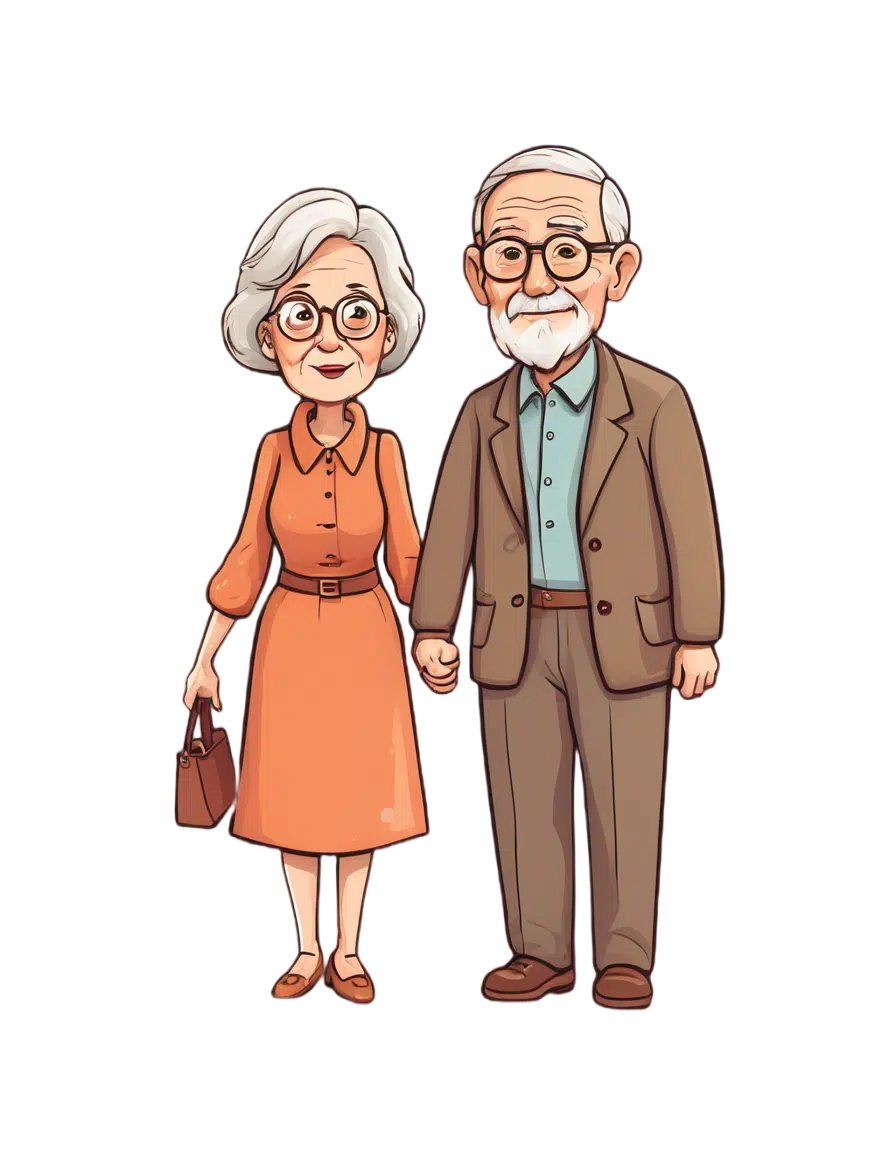
How do I handle it if my parent is refusing aged care? 4 things to consider
10almonds is reader-supported. We may, at no cost to you, receive a portion of sales if you purchase a product through a link in this article.
It’s a shock when we realise our parents aren’t managing well at home.
Perhaps the house and garden are looking more chaotic, and Mum or Dad are relying more on snacks than nutritious meals. Maybe their grooming or hygiene has declined markedly, they are socially isolated or not doing the things they used to enjoy. They may be losing weight, have had a fall, aren’t managing their medications correctly, and are at risk of getting scammed.
You’re worried and you want them to be safe and healthy. You’ve tried to talk to them about aged care but been met with swift refusal and an indignant declaration “I don’t need help – everything is fine!” Now what?
Here are four things to consider.
1. Start with more help at home
Getting help and support at home can help keep Mum or Dad well and comfortable without them needing to move.
Consider drawing up a roster of family and friends visiting to help with shopping, cleaning and outings. You can also use home aged care services – or a combination of both.
Government subsidised home care services provide from one to 13 hours of care a week. You can get more help if you are a veteran or are able to pay privately. You can take advantage of things like rehabilitation, fall risk-reduction programs, personal alarms, stove automatic switch-offs and other technology aimed at increasing safety.
Call My Aged Care to discuss your options.

Nadino/Shutterstock
2. Be prepared for multiple conversations
Getting Mum or Dad to accept paid help can be tricky. Many families often have multiple conversations around aged care before a decision is made.
Ideally, the older person feels supported rather than attacked during these conversations.
Some families have a meeting, so everyone is coming together to help. In other families, certain family members or friends might be better placed to have these conversations – perhaps the daughter with the health background, or the auntie or GP who Mum trusts more to provide good advice.
Mum or Dad’s main emotional support person should try to maintain their relationship. It’s OK to get someone else (like the GP, the hospital or an adult child) to play “bad cop”, while a different person (such as the older person’s spouse, or a different adult child) plays “good cop”.
3. Understand the options when help at home isn’t enough
If you have maximised home support and it’s not enough, or if the hospital won’t discharge Mum or Dad without extensive supports, then you may be considering a nursing home (also known as residential aged care in Australia).
Every person has a legal right to choose where we live (unless they have lost capacity to make that decision).
This means families can’t put Mum or Dad into residential aged care against their will. Every person also has the right to choose to take risks. People can choose to continue to live at home, even if it means they might not get help immediately if they fall, or eat poorly. We should respect Mum or Dad’s decisions, even if we disagree with them. Researchers call this “dignity of risk”.
It’s important to understand Mum or Dad’s point of view. Listen to them. Try to figure out what they are feeling, and what they are worried might happen (which might not be rational).
Try to understand what’s really important to their quality of life. Is it the dog, having privacy in their safe space, seeing grandchildren and friends, or something else?
Older people are often understandably concerned about losing independence, losing control, and having strangers in their personal space.
Sometimes families prioritise physical health over psychological wellbeing. But we need to consider both when considering nursing home admission.
Research suggests going into a nursing home temporarily increases loneliness, risk of depression and anxiety, and sense of losing control.
Mum and Dad should be involved in the decision-making process about where they live, and when they might move.
Some families start looking “just in case” as it often takes some time to find the right nursing home and there can be a wait.
After you have your top two or three choices, take Mum or Dad to visit them. If this is not possible, take pictures of the rooms, the public areas in the nursing home, the menu and the activities schedule.
We should give Mum or Dad information about their options and risks so they can make informed (and hopefully better) decisions.
For instance, if they visit a nursing home and the manager says they can go on outings whenever they want, this might dispel a belief they are “locked up”.
Having one or two weeks “respite” in a home may let them try it out before making the big decision about staying permanently. And if they find the place unacceptable, they can try another nursing home instead.
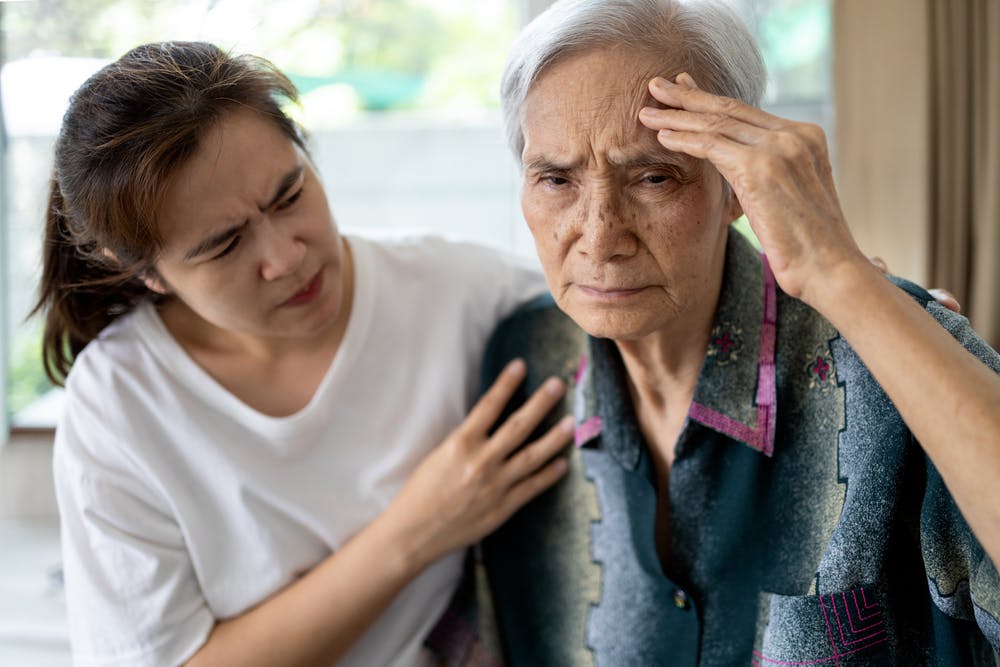
CGN089/Shutterstock
4. Understand the options if a parent has lost capacity to make decisions
If Mum or Dad have lost capacity to choose where they live, family may be able to make that decision in their best interests.
If it’s not clear whether a person has capacity to make a particular decision, a medical practitioner can assess for that capacity.
Mum or Dad may have appointed an enduring guardian to make decisions about their health and lifestyle decisions when they are not able to.
An enduring guardian can make the decision that the person should live in residential aged care, if the person no longer has the capacity to make that decision themselves.
If Mum or Dad didn’t appoint an enduring guardian, and have lost capacity, then a court or tribunal can appoint that person a private guardian (usually a family member, close friend or unpaid carer).
If no such person is available to act as private guardian, a public official may be appointed as public guardian.
Deal with your own feelings
Families often feel guilt and grief during the decision-making and transition process.
Families need to act in the best interest of Mum or Dad, but also balance other caring responsibilities, financial priorities and their own wellbeing.
Lee-Fay Low, Professor in Ageing and Health, University of Sydney
This article is republished from The Conversation under a Creative Commons license. Read the original article.
Don’t Forget…
Did you arrive here from our newsletter? Don’t forget to return to the email to continue learning!
Recommended
Learn to Age Gracefully
Join the 98k+ American women taking control of their health & aging with our 100% free (and fun!) daily emails:
-
The 4 Best Stretches To Do Before Bed (And Even: To Do In Bed!)
10almonds is reader-supported. We may, at no cost to you, receive a portion of sales if you purchase a product through a link in this article.
Contrary to the stereotype of early morning yoga sessions, the evening is actually the best time to improve flexibility.
Not only that, but there are benefits to stretching on a soft surface, such as your bed, rather than the floor—in few words, it reduces the nervous feedback that limits your flexibility.
The most comfortable yoga session
Here are three great stretches to do of an evening:
Frog pose:
- Spread your knees wide, forming 90° angles at your ankles, knees, and hips.
- Press your hips downward and experiment with tilting your tailbone upwards.
- Hold for 1–3 minutes, breathing calmly.
Half straddle stretch:
- This stretch is done with one leg extended, and your other leg bent with foot against your inner thigh.
- Keep your lower back elongated while folding forward.
- Adjust the stretch’s focus by moving towards the middle or towards the extended leg, to stretch your inner thighs more or your hamstrings more, respectively.
- Hold for 1–2 minutes per leg.
Tabletop chest stretch:
- From a tabletop position, walk/slide your hands forward and drop your chest down.
- Hold for at least 1 minute, breathing deeply.
- Variations:
- Turn thumbs upward to engage side muscles.
- Cross arms to stretch the ribs.
Cross-legged forward fold:
- Start in a cross-legged seated position and slightly shift your hips backwards.
- Fold forward, allowing the spine to round.
- Hold for 1–3 minutes, breathing calmly.
This latter is especially good despite its simplicity, as it provides a deep stretch in the outer hips and lower back.
For more on all of these plus visual demonstrations, enjoy:
Click Here If The Embedded Video Doesn’t Load Automatically!
Want to learn more?
You might also like:
Over 50? Do These 3 Stretches Every Morning To Avoid Pain
Take care!
Share This Post
-
Blueberries vs Guava – Which is Healthier?
10almonds is reader-supported. We may, at no cost to you, receive a portion of sales if you purchase a product through a link in this article.
Our Verdict
When comparing blueberries to guava, we picked the guava.
Why?
Both have their merits! But…
In terms of macros, the guava has more than 2x the fiber for the same carbs, and nearly 3x the protein (not that this latter is much), winning easily in this category, mostly on account of the fiber.
In the category of vitamins, blueberries have a lot more vitamin K, while guava has a lot more of vitamins A, B1, B3, B5, B6, B7, B9, C, and E, winning this round by a country mile.
Looking at minerals, blueberries have more manganese, while guava has more calcium, copper, magnesium, phosphorus, potassium, selenium, and zinc, scoring another compelling victory for guava in this round.
In other considerations, like most berries, blueberries do have an abundance of polyphenols, rather more than guava, and thus win a round finally.
Adding up the sections makes for a clear overall win for guava, but by all means enjoy either or both, as blueberries’ polyphenol content is not to be overlooked, nor is all that vitamin K!
Want to learn more?
You might like:
21 Most Beneficial Polyphenols & What Foods Have Them
Enjoy!
Share This Post
-
Insomnia Decoded – by Dr. Audrey Porter
10almonds is reader-supported. We may, at no cost to you, receive a portion of sales if you purchase a product through a link in this article.
We’ve written about sleep books before, so what makes this one different? Its major selling point is: most of the focus isn’t on the things that everyone already knows.
Yes, there’s a section on sleep hygiene and yes it’ll tell you to cut the caffeine and alcohol, but most of the advice here is beyond that.
Rather, it looks at finding out (if you don’t already know for sure) what is keeping you from healthy sleep, be it environmental, directly physical, or psychological, and breaking out of the stress-sleep cycle that often emerges from such.
The style is light and conversational, but includes plenty of science too; Dr. Porter knows her stuff.
Bottom line: if you feel like you know what you should be doing, but somehow life keeps conspiring to stop you from doing it, then this is the book that could help you break out that cycle.
Click here to check out Insomnia Decoded, and get regular healthy sleep!
Share This Post
Related Posts
-
How To Really Look After Your Joints
10almonds is reader-supported. We may, at no cost to you, receive a portion of sales if you purchase a product through a link in this article.
The Other Ways To Look After Your Joints
When it comes to joint health, most people have two quick go-to items:
- Stretching
- Supplements like omega-3 and glucosamine sulfate
Stretching, and specifically, mobility exercises, are important! We’ll have to do a main feature on these sometime soon. But for today, we’ll just say: yes, gentle daily stretches go a long way, as does just generally moving more.
And, those supplements are not without their merits. For example:
- Effect of omega-3 on painful symptoms of patients with osteoarthritis of the synovial joints: systematic review and meta-analysis
- Glucosamine sulfate in the treatment of knee osteoarthritis symptoms: a randomized, double-blind, placebo-controlled study using acetaminophen as a side comparator
Of those, glucosamine sulfate may have an extra benefit in now just alleviating the symptoms, but also slowing the progression of degenerative joint conditions (like arthritis of various kinds). This is something it shares with chondroitin sulfate:
Effect of glucosamine or chondroitin sulfate on the osteoarthritis progression: a meta-analysis
An unlikely extra use for the humble cucumber…
As it turns out, cucumber extract beats glucosamine and chondroitin by 200%, at 1/135th of the dose.
You read that right, and it’s not a typo. See for yourself:
Reduce inflammation, have happier joints
Joint pain and joint degeneration in general is certainly not just about inflammation; there is physical wear-and-tear too. But combatting inflammation is important, and turmeric, which we’ve done a main feature on before, is a potent helper in this regard:
See also: Keep Inflammation At Bay
(a whole list of tips for, well, keeping inflammation at bay)
About that wear-and-tear…
Your bones and joints are made of stuff, and that stuff needs to be replaced. As we get older, the body typically gets worse at replacing it in a timely and efficient fashion. We can help it do its job, by giving it more of the stuff it needs.
And what stuff is that?
Well, minerals like calcium and phosphorus are important, but a lot is also protein! Specifically, collagen. We did a main feature on this before, which is good, as it’d take us a lot of space to cover all the benefits here:
We Are Such Stuff As Fish Are Made Of
Short version? People take collagen for their skin, but really, its biggest benefit is for our bones and joints!
Wrap up warmly and… No wait, skip that.
If you have arthritis, you may indeed “feel it in your bones” when the weather changes. But the remedy for that is not to try to fight it, but rather, to strengthen your body’s ability to respond to it.
The answer? Cryotherapy, with ice baths ranking top:
- Effects of an Exercise Program and Cold-Water Immersion Recovery in Patients with Rheumatoid Arthritis (RA): Feasibility Study
- Effectiveness of home-based conventional exercise and cryotherapy on daily living activities in patients with knee osteoarthritis: A randomized controlled clinical trial
- Local Cryotherapy, Comparison of Cold Air and Ice Massage on Pain and Handgrip Strength in Patients with Rheumatoid Arthritis
Note that this can be just localized, so for example if the problem joints are your wrists, a washing-up bowl with water and ice will do just nicely.
Note also that, per that last study, a single session will only alleviate the pain, not the disease itself. For that (per the other studies) more sessions are required.
We did a main feature about cryotherapy a while back, and it explains how and why it works:
A Cold Shower A Day Keeps The Doctor Away?
Take care!
Don’t Forget…
Did you arrive here from our newsletter? Don’t forget to return to the email to continue learning!
Learn to Age Gracefully
Join the 98k+ American women taking control of their health & aging with our 100% free (and fun!) daily emails:
-
How Useful Are Our Dreams
10almonds is reader-supported. We may, at no cost to you, receive a portion of sales if you purchase a product through a link in this article.
What’s In A Dream?
We were recently asked:
❝I have a question or a suggestion for coverage in your “Psychology Sunday”. Dreams: their relevance, meanings ( if any) interpretations? I just wondered what the modern psychological opinions are about dreams in general.❞
~ 10almonds subscriber
There are two main schools of thought, and one main effort to reconcile those two. The third one hasn’t quite caught on so far as to be considered a “school of thought” yet though.
The Top-Down Model (Psychoanalysts)
Psychoanalysts broadly follow the theories of Freud, or at least evolved from there. Freud was demonstrably wrong about very many things. Most of his theories have been debunked and ditched—hence the charitable “or at least evolved from there” phrasing when it comes to modern psychoanalytic schools of thought. Perhaps another day, we’ll go into all the ways Freud went wrong. However, for today, one thing he wasn’t bad at…
According to Freud, our dreams reveal our subconscious desires and fears, sometimes directly and sometimes dressed in metaphor.
Examples of literal representations might be:
- sex dreams (revealing our subconscious desires; perhaps consciously we had not thought about that person that way, or had not considered that sex act desirable)
- getting killed and dying (revealing our subconscious fear of death, not something most people give a lot of conscious thought to most of the time)
Examples of metaphorical representations might be:
- dreams of childhood (revealing our subconscious desires to feel safe and nurtured, or perhaps something else depending on the nature of the dream; maybe a return to innocence, or a clean slate)
- dreams of being pursued (revealing our subconscious fear of bad consequences of our actions/inactions, for example, responsibilities to which we have not attended, debts are a good example for many people; or social contact where the ball was left in our court and we dropped it, that kind of thing)
One can read all kinds of guides to dream symbology, and learn such arcane lore as “if you dream of your teeth crumbling, you have financial worries”, but the truth is that “this thing means that other thing” symbolic equations are not only highly personal, but also incredibly culture-bound.
For example:
- To one person, bees could be a symbol of feeling plagued by uncountable small threats; to another, they could be a symbol of abundance, or of teamwork
- One culture’s “crow as an omen of death” is another culture’s “crow as a symbol of wisdom”
- For that matter, in some cultures, white means purity; in others, it means death.
Even such classically Freudian things as dreaming of one’s mother and/or father (in whatever context) will be strongly informed by one’s own waking-world relationship (or lack thereof) with same. Even in Freud’s own psychoanalysis, the “mother” for the sake of such analysis was the person who nurtured, and the “father” was the person who drew the nurturer’s attention away, so they could be switched gender roles, or even different people entirely than one’s parents.
The only real way to know what, if anything, your dreams are trying to tell you, is to ask yourself. You can do that…
- by reflection and personal interrogation (see for example: The Easiest Way To Take Up Journaling)
- or by externalising parts of your subconscious (as in Internal Family Systems therapy)
- or by talking directly to your subconscious where it is, by means of lucid dreaming.
The idea with lucid dreaming is that since any dream character is a facet of your subconscious generated by your own mind, by talking to that character you can ask questions directly of your subconscious (the popular 2010 movie “Inception” was actually quite accurate in this regard, by the way).
To read more about how to do this kind of self-therapy through lucid dreaming, you might want to check out this book we reviewed previously; it is the go-to book of lucid dreaming enthusiasts, and will honestly give you everything you need in one go:
Lucid Dreaming: A Concise Guide to Awakening in Your Dreams and in Your Life – by Dr. Stephen LaBerge
The Bottom-Up Model (Neuroscientists)
This will take a lot less writing, because it’s practically a null hypothesis (i.e., the simplest default assumption before considering any additional evidence that might support or refute it; usually some variant of “nothing unusual going on here”).
The Bottom-Up model holds that our brains run regular maintenance cycles during REM sleep (a biological equivalent of defragging a computer), and the brain interprets these pieces of information flying by and, because of the mind’s tendency to look for patterns, fills in the rest (much like how modern generative AI can “expand” a source image to create more of the same and fill in the blanks), resulting in the often narratively wacky, but ultimately random, vivid hallucinations that we call dreams.
The Hybrid Model (per Cartwright, 2012)
This is really just one woman’s vision, but it’s an incredibly compelling one, that takes the Bottom-Up model and asks “what if we did all that bio-stuff, and then our subconscious mind influenced the interpretation of the random patterns, to create dreams that are subjectively meaningful, and thus do indeed represent our subconscious?
It’s best explained in her own words, though, so it’s time for another book recommendation (we’ve reviewed this one before, too):
Enjoy!
Don’t Forget…
Did you arrive here from our newsletter? Don’t forget to return to the email to continue learning!
Learn to Age Gracefully
Join the 98k+ American women taking control of their health & aging with our 100% free (and fun!) daily emails:
-
Asparagus vs Brussels Sprouts – Which is Healthier?
10almonds is reader-supported. We may, at no cost to you, receive a portion of sales if you purchase a product through a link in this article.
Our Verdict
When comparing asparagus to Brussels sprouts, we picked the sprouts.
Why?
Both are great! But…
In terms of macros, Brussels sprouts have more fiber, carbs, and protein, making them the more nutrient-dense option in the macros category.
In the category of vitamins, asparagus has slightly more of vitamins B1, B2, B3, and E, while Brussels sprouts have more of vitamins B5, B6, B7, B9, C, K, and choline, making a respectable win for sprouts there.
When it comes to minerals, asparagus has more coper, iron, selenium, and zinc, while Brussels sprouts have more calcium, magnesium, manganese, phosphorus, and potassium, for a more marginal win this time.
Looking at phytochemicals, asparagus has about 10x the polyphenol content (notably, quercetin), and thus scores a win here.
Adding up the sections makes for a convincing overall win for Brussels sprouts, but asparagus definitely has its merits too, so by all means enjoy either or both; diversity is good!
Want to learn more?
You might like:
Good Things Come In Small Packages: Sprout Your Seeds, Grains, Beans, Etc ← one of the reasons sprouts are so potent!
Enjoy!
Don’t Forget…
Did you arrive here from our newsletter? Don’t forget to return to the email to continue learning!
Learn to Age Gracefully
Join the 98k+ American women taking control of their health & aging with our 100% free (and fun!) daily emails:


