
Fava Beans vs Soybeans – Which is Healthier?
10almonds is reader-supported. We may, at no cost to you, receive a portion of sales if you purchase a product through a link in this article.
Our Verdict
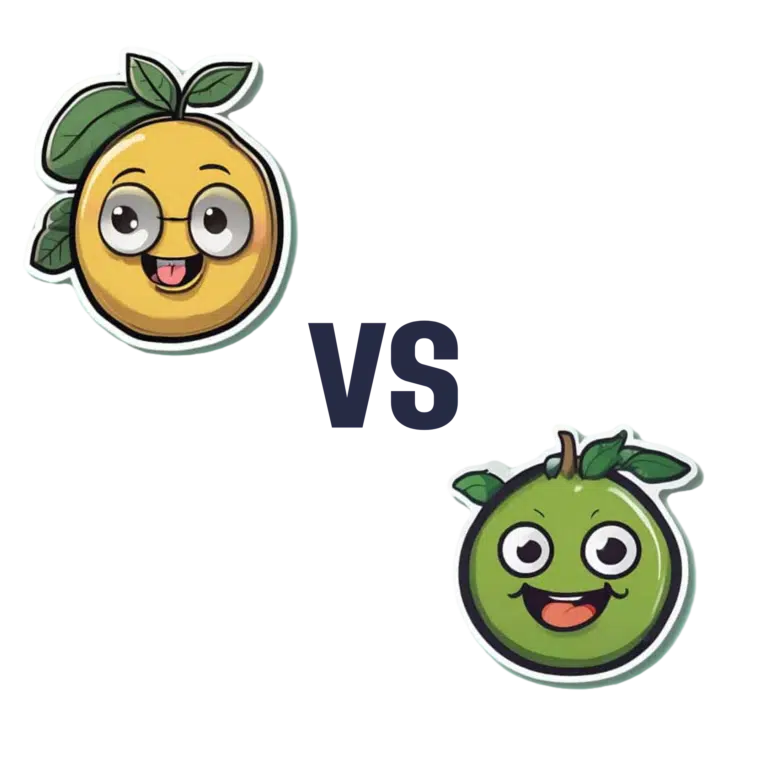
When comparing fava beans to soybeans, we picked the soy.
Why?
It was quite one-sided today:
In terms of macros, fava beans have more carbs, while soybeans have more fiber and more than 2x the protein, which we say is a clear win for soy in this category.
In the category of vitamins, fava beans have more of vitamins A, B3, and B9, while soybeans have more of vitamins B1, B2, B5, B6, B7, C, E, and K, winning in this round too.
Looking at minerals, fava beans are not higher in any mineral, while soybeans boast more calcium, copper, iron, magnesium, manganese, phosphorus, potassium, selenium, and zinc, winning their third round in a row.
Adding up the sections makes for a clear overall win for soy, but by all means enjoy either or both—unless you have a soy allergy, of course, which would change everything!
Want to learn more?
You might like:
Why You Can’t Skimp On Amino Acids
Enjoy!
Don’t Forget…
Did you arrive here from our newsletter? Don’t forget to return to the email to continue learning!
Recommended
Learn to Age Gracefully
Join the 98k+ American women taking control of their health & aging with our 100% free (and fun!) daily emails:
-
Building Psychological Resilience (Without Undue Hardship)
10almonds is reader-supported. We may, at no cost to you, receive a portion of sales if you purchase a product through a link in this article.
What’s The Worst That Could Happen?
When we talk about the five lifestyle factors that make the biggest difference to health, stress management would be a worthy addition as number six. We haven’t focused explicitly on that for a while, so let’s get ready to start the New Year on a good footing…
You’re not going to have a stress-free life
What a tender world that would be! Hopefully your stressors will be small and manageable, but rest assured, things will stress you.
And that’s key: “rest assured”. Know it now, prepare for it, and build resilience.
Sounds grim, doesn’t it? It doesn’t have to be, though.
When the forecast weather is cold and wet, you’re not afraid of it when you have a warm dry house. When the heating bill comes for that warm dry house, you’re not afraid of it when you have money to pay it. If you didn’t have the money and the warm dry house, the cold wet weather could be devastating to you.
The lesson here is: we can generally handle what we’re prepared for.
Negative visualization and the PNS
This is the opposite of what a lot of “think and grow rich”-style gurus would advise. And indeed, it’s not helpful to slide into anxious worrying.
If you do find yourself spiralling, here’s a tool for getting out of that spiral:
RAIN: an intervention for dealing with difficult emotions
For now, however, we’re going to practice Radical Acceptance.
First, some biology: you may be aware that your Central Nervous System (CNS) branches into the Sympathetic Nervous System (SNS) and the Parasympathetic Nervous System (PNS).
The PNS is the part that cues our body to relax, and suppresses our fight/flight response. We’re going to activate it.
Activating the PNS is easy for most people in comfortable circumstances (e.g., you are not currently exposed to stressful stimuli). It may well be activated already, and if it’s not, a few deep breaths is usually all it takes.
If you’d like a quick and easy Mindfulness-Based Stress Reduction (MBSR) technique, here you go:
No-Frills, Evidence-Based Mindfulness
Activating the PNS is hard for most people in difficult circumstances (e.g., you either are currently exposed to stressful stimuli, or you are in one of the emotional spirals we discussed earlier).
However, we can trick our bodies and brains by—when we are safe and unstressed—practicing imagining those stressful stimuli. Taking a moment to not just imagine it experientially, but immersively. This, in CBT and DBT, is the modern equivalent to the old samurai who simply accepted, before battle, that they were already dead—and thus went into battle with zero fear of death.
A less drastic example is the zen master who had a favorite teacup, and feared it would get broken. So he would tell himself “the cup is already broken”. One day, it actually broke, and he simply smiled ruefully and said “Of course”.
How this ties together: practice the mindfulness-based stress reduction we linked above, while imagining the things that do/would stress you the most.
Since it’s just imagination, this is a little easier than when the thing is actually happening. Practicing this way means that when and if the thing actually happens (an unfortunate diagnosis, a financial reversal, whatever it may be), our CNS is already well-trained to respond to stress with a dose of PNS-induced calm.
You can also leverage hormesis, a beneficial aspect of (in this case, optional and chosen by you) acute stress:
Dr. Elissa Epel | The Stress Prescription
Psychological resilience training
This (learned!) ability to respond to stress in an adaptive fashion (without maladaptive coping strategies such as unhelpful behavioral reactivity and/or substance use) is a key part of what in psychology is called resilience:
And yes, the CBT/DBT/MBSR methods we’ve been giving you are the evidence-based gold standard.
Only the best for 10almonds subscribers! 😎
❝That was helpful, but not cheery; can we finish the year on a cheerier note?❞
We can indeed:
How To Get Your Brain On A More Positive Track (Without Toxic Positivity)
Take care!
Share This Post
-
The Popular Longevity Compound That Gives You Cancer?
10almonds is reader-supported. We may, at no cost to you, receive a portion of sales if you purchase a product through a link in this article.
Aging and cancer are deeply interconnected.
To oversimplify (because otherwise each bullet point would be the size of a large library):
- Cellular aging is in large part a matter of DNA damage, copying errors, errors beyond copied forwards, exacerbating the problem
- That latter item, by the way, is one of the reasons why sometimes a lot of aging seems to arrive all at once in a burst; it’s because once a DNA copying error is made, it gets copied forwards and proliferated rapidly. On which note…
- Cancer is in large part a matter of DNA damage that specifically made the cell line accidentally immortal (sounds good, is very bad), and then it gets copied forwards and proliferated
- Which can kill you, because you’re only supposed to have so many cells there (they’re supposed to die at approximately the same rate that they’re made, and instead they’ve stopped dying and they’re proliferating exponentially) so what you end up with is exponentially increasingly many cells that are still using the resources from the still-working cells around them, and/but doing nothing but growing an ever-increasing tumorous mass that, depending on where it is, might kill you directly (by pressure against an organ, especially if it’s the brain) if the systemic exhaustion and/or indirect organ failure doesn’t get you first.
The good news is that this means that many things that are anti-aging are also anticancer.
The bad news is that this isn’t always so!
Polyamines: for better or for worse, in sickness or in health?
We’ve written about polyamines before, and their role in healthy longevity, for example: Spermidine For Longevity
And, for that matter: Spermine vs Alzheimer’s & Parkinson’s!
However, scientists (Dr. Keiko Kashiwagi et al.) have investigated why these longevity-inducing compounds are also consistently elevated in cancer cells (remember, cancer cells are terribly long-lived, being in fact biologically immortal!).
Firstly, we need to understand what polyamines do in healthy cells: polyamines act as “geroprotectors” by stimulating autophagy*, the cellular recycling process, primarily through activation of a specific protein (known to its friends by the snappy name of “eIF5A1”), which supports mitochondrial function and healthy aging.
*We wrote about this here: Fisetin: The Anti-Aging Assassin ← so-called because it works by killing the aging cells that need to die sooner rather than later if aging is not to be exacerbated by copying their mistakes forwards
What Dr. Kashiwagi and her team found, using high-resolution proteomics across more than 6,700* proteins in human cancer cell lines, was that polyamines first and foremost boost glycolysis—rapid glucose breakdown for energy—rather than mitochondrial respiration. In other words, reinforcing a metabolic pattern typical of cancer cells.
*The paper says “>6,700”, and links to a database. Wanting to know the precise number to tell you, we went to look at the database. It took a long time to download, and well, it’s an Excel spreadsheet with 60 columns and 96,294 rows. We’re keen to go the extra mile at 10almonds, but even we have our limits, so we will tell you the number is somewhere between 6,700 and 96,294. It’s a lot.
Back to the concepts rather than the numbers: this difference (favoring glycolysis vs mitochondrial respiration) becomes a problem, because… Well, you remember our dear friend eIF5A1?
It has a sneaky sibling, eIF5A2.
Now, while eIF5A1 supports autophagy and mitochondrial health in normal cells, this closely-related eIF5A2 protein—sharing 84% of its amino acid sequence—is selectively increased in cancer cells and, as an encore, drives tumor-promoting gene expression.
You can read the paper itself, here: Polyamines stimulate the protein synthesis of the translation initiation factor eIF5A2, participating in mRNA decoding, distinct from eIF5A1
So, what does this mean, in practical terms?
The researchers suggest that targeting eIF5A2 or its interaction with ribosomes could provide a selective cancer therapy strategy, potentially blocking tumor growth without disrupting the beneficial eIF5A1-mediated effects linked to healthy aging.
But that’s not very useful on an individual level.
Instead, what we might do is draw from conclusions about the use of other senolytics—compounds that increase autophagy and thus improve healthy longevity by killing “zombie cells” that otherwise were overdue for dying.
For example, in this: The Drug & Supplement Combo That Reverses Aging
In this case, the researchers found that the senolytic compounds were best taken not daily, but rather once every two weeks.
Why? So that the body’s normal tumor-suppression systems can be working most of the time, and the senolytic does a clearing-out of old cells once every two weeks, which is a one- or two-day purge, not long enough for any cancer to get a foothold before the normal tumor-suppression systems come back online.
Want to learn more?
You might enjoy:
Fasting Cancer – by Dr. Valter Longo
Take care!
Share This Post
- Cellular aging is in large part a matter of DNA damage, copying errors, errors beyond copied forwards, exacerbating the problem
-
Hashimoto’s Food Pharmacology – by Dr. Izabella Wentz
10almonds is reader-supported. We may, at no cost to you, receive a portion of sales if you purchase a product through a link in this article.
The author is a doctor of pharmacology, and we’ve featured her before as an expert on Hashimoto’s, which she has. She has recommendations about specific blood tests and medications, but in this book she’s mainly focussing on what she calls the “three Rs” of managing hypothyroidism:
- Remove the causes and triggers of your hypothyroidism, so far as possible
- Repair the damage caused to your body, especially your gut
- Replace the thyroid hormones and related things in which your body has become deficient
To this end, she provides recipes that avoid processed meats and unfermented dairy, and include plenty of nutrient-dense whole foods specifically tailored to meet the nutritional needs of someone with hypothyroidism.
A nice bonus of the presentation of recipes (of which there are 125, if we include things like “mint tea” and “tomato sauce” and “hot lemon water” as recipes) is explaining the thyroid-supporting elements of each recipe.
A downside for some will be that if you are vegetarian/vegan, this book is very much not, and since many recipes are paleo-style meat dishes, substitutions will change the nutritional profile completely.
Bottom line: if you have hypothyroidism (especially if: Hashimoto’s) and like meat, this will be a great recipe book for you.
Click here to check out Hashimoto’s Food Pharmacology, and get cooking!
Share This Post
Related Posts
-
Languishing – by Prof. Corey Keyes
10almonds is reader-supported. We may, at no cost to you, receive a portion of sales if you purchase a product through a link in this article.
We’ve written before about depression and “flourishing” but what about when one isn’t exactly flourishing, but is not necessarily in the depths of depression either? That’s what this book is about.
Prof. Keyes offers, from his extensive research, hope for those who do not check enough of the boxes to be considered depressed, but who are also definitely more in the lane of “surviving” than “thriving”.
Specifically, he outlines five key ways to make the step from languishing to flourishing, based not on motivational rhetoric, but actual data-based science:
- Learn (creating your personal story of self-growth)
- Connect (building relationships, on the individual level and especially on the community level)
- Transcend (developing psychological resilience to the unexpected)
- Help (others! This is about finding your purpose, and then actively living it)
- Play (this is a necessary “recharge” element that many people miss, especially as we get older)
With regard to finding one’s purpose being given the one-word summary of “help”, this is a callback to our tribal origins, and how we thrive and flourish best and feel happiest when we have a role to fulfil and provide value to those around us)
Bottom line: if you’re not at the point of struggling to get out of bed each day, but you’re also not exactly leaping out of bed with a smile, this book can help get you from one place to the other.
Don’t Forget…
Did you arrive here from our newsletter? Don’t forget to return to the email to continue learning!
Learn to Age Gracefully
Join the 98k+ American women taking control of their health & aging with our 100% free (and fun!) daily emails:
-
What You Don’t Know Can Kill You
10almonds is reader-supported. We may, at no cost to you, receive a portion of sales if you purchase a product through a link in this article.
Knowledge Is Power!
This is Dr. Simran Malhotra. She’s triple board-certified (in lifestyle medicine, internal medicine, and palliative care), and is also a health and wellness coach.
What does she want us to know?
Three things:
Wellness starts with your mindset
Dr. Malhotra shifted her priorities a lot during the initial and perhaps most chaotic phase of the COVID pandemic:
❝My husband, a critical care physician, was consumed in the trenches of caring for COVID patients in the ICU. I found myself knee-deep in virtual meetings with families whose loved ones were dying of severe COVID-related illnesses. Between the two of us, we saw more trauma, suffering, and death, than we could have imagined.
The COVID-19 pandemic opened my eyes to how quickly life can change our plans and reinforced the importance of being mindful of each day. Harnessing the power to make informed decisions is important, but perhaps even more important is focusing on what is in our control and taking action, even if it is the tiniest step in the direction we want to go!❞
~ Dr. Simran Malhotra
We can only make informed decisions if we have good information. That’s one of the reasons we try to share as much information as we can each day at 10almonds! But a lot will always depend on personalized information.
There are one-off (and sometimes potentially life-saving) things like health genomics:
The Real Benefit Of Genetic Testing
…but also smaller things that are informative on an ongoing basis, such as keeping track of your weight, your blood pressure, your hormones, and other metrics. You can even get fancy:
Track Your Blood Sugars For Better Personalized Health
Lifestyle is medicine
It’s often said that “food is medicine”. But also, movement is medicine. Sleep is medicine. In short, your lifestyle is the most powerful medicine that has ever existed.
Lifestyle encompasses very many things, but fortunately, there’s an “80:20 rule” in play that simplifies it a lot because if you take care of the top few things, the rest will tend to look after themselves:
These Top Few Things Make The Biggest Difference To Overall Health
Gratitude is better than fear
If we receive an unfavorable diagnosis (and let’s face it, most diagnoses are unfavorable), it might not seem like something to be grateful for.
But it is, insofar as it allows us to then take action! The information itself is what gives us our best chance of staying safe. And if that’s not possible e.g. in the worst case scenario, a terminal diagnosis, (bearing in mind that one of Dr. Malhotra’s three board certifications is in palliative care, so she sees this a lot), it at least gives us the information that allows us to make the best use of whatever remains to us.
See also: Managing Your Mortality
Which is very important!
…and/but possibly not the cheeriest note on which to end, so when you’ve read that, let’s finish today’s main feature on a happier kind of gratitude:
How To Get Your Brain On A More Positive Track (Without Toxic Positivity)
Want to hear more from Dr. Malhotra?
Showing how serious she is about how our genes do not determine our destiny and knowledge is power, here she talks about her “previvor’s journey”, as she puts it, with regard to why she decided to have preventative cancer surgery in light of discovering her BRCA1 genetic mutation:
Click Here If The Embedded Video Doesn’t Load Automatically
Take care!
Don’t Forget…
Did you arrive here from our newsletter? Don’t forget to return to the email to continue learning!
Learn to Age Gracefully
Join the 98k+ American women taking control of their health & aging with our 100% free (and fun!) daily emails:
-
The “Forever Chemicals” That Can Triple The Risk Of Liver Disease
10almonds is reader-supported. We may, at no cost to you, receive a portion of sales if you purchase a product through a link in this article.
Usually, our livers work best when we’re young, and begin to struggle in middle-age if we’re not careful with our lifestyle.
If you are thinking “well, I must be doing great, as I’m in/past middle-age and my liver is fine”, then: is that backed up with a recent liver test?
- If it is: great!
- If isn’t: please be aware that your liver can continue more-or-less functioning down to its last tiny bit, and it’s not uncommon to not have symptoms until the situation is truly very dire indeed.
Here’s what to look out for, though: 12 Signs Of Liver Disease That You Can See
Now, we said “usually, our livers work best when we’re young”.
But there are surprising things that can done to get liver disease started early…
The PFAS to MASLD pipeline
First, a note on terminology, because there has been a rebrand: what used to be called non-alcoholic fatty liver disease (NAFLD) is now called metabolic dysfunction-associated steatotic liver disease (MASLD).
Attentive readers may have noticed that there appears to be a D missing from the acronym. We noticed that too, and were not able to find any explanation of why it’s not MDASLD.
However, you can read about why the change was made, and how the decision was agreed upon, here: A multisociety Delphi consensus statement on new fatty liver disease nomenclature
Now, onto the latest science…
Researchers (Dr. Lida Chatzi et al.) analyzed data from hundreds of adolescents and young adults, measuring eight different per- and polyfluoroalkyl substances (PFAS) in blood, and also assessed liver fat using MRI.
What Dr. Chatzi and her team found is that higher blood levels of certain PFAS were associated with an increased risk of MASLD in adolescents, with risk estimates as high as nearly threefold for some exposures.
The PFAS in question are widely used in nonstick cookware, stain- and water-repellent fabrics, food packaging, and some cleaning products. They persist in the environment, and are detectable in the blood of more than 99% of people in the US, and some are hit harder than others. While many health risks hit poor people the hardest, this one mostly affects wealthier people more—for why, see: The Household Cleaner That Triples Liver Disease Risk
Back to the recent study, it turns out that adolescents are even more vulnerable to the adverse health effects of PFAS, due to being in a critical period of development and growth.
Shocking nobody, smoking also made it worse at any age.
You can read the paper in full, here: Associations between per- and polyfluoroalkyl substances and metabolic dysfunction-associated steatotic liver disease in adolescents and young adults: modifying roles of age, lifestyle factors, and PNPLA3 genotype
You may be wondering about that last bit: having the PNPLA3 GG genotype, a known liver fat risk variant, further increased the risk beyond the already-increased risk found in those without that genotype.
If you’re not sure about your genes, then see: The Real Benefits Of Genetic Testing
Want to learn more?
Check out:
And if you want to give it some extra support…
Consider: N-Acetyl Cysteine For The Liver & More
Or for a much deeper dive into the broader topic of avoiding the toxins the industrial world is keen to throw our way, you might like this book that we reviewed a little while back:
Healthy Living in a Contaminated World – by Dr. Donald Hoernschemeyer
Take care!
Don’t Forget…
Did you arrive here from our newsletter? Don’t forget to return to the email to continue learning!
Learn to Age Gracefully
Join the 98k+ American women taking control of their health & aging with our 100% free (and fun!) daily emails:


