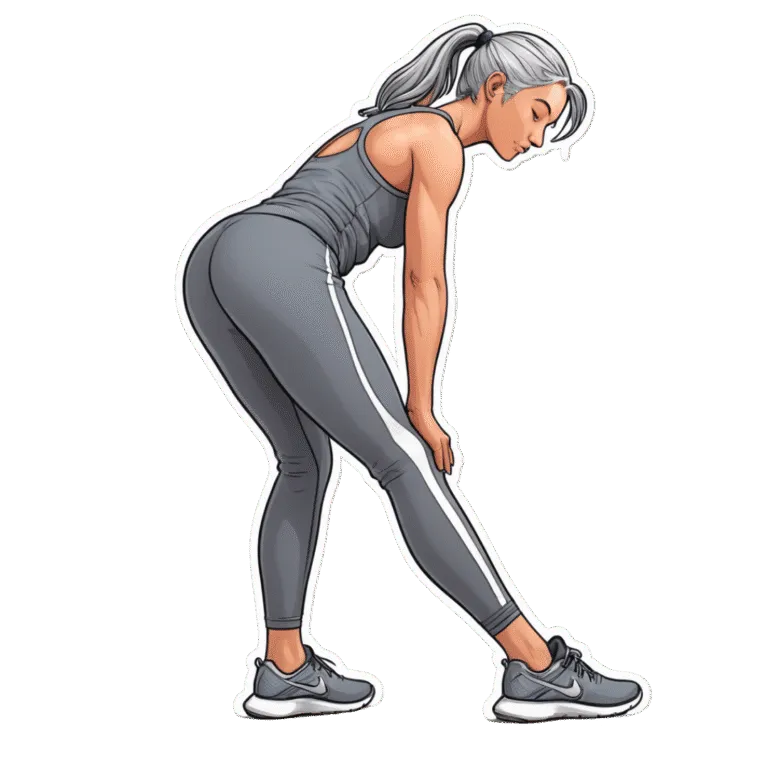
After Decades Of Mobility Training, This Is What Works

10almonds is reader-supported. We may, at no cost to you, receive a portion of sales if you purchase a product through a link in this article.

Alex Lorenz has 30+ years of experience in movement disciplines like Taekwondo, parkour, and calisthenics, with mobility and flexibility being the key to progress, recovery, and injury prevention.

Here’s what he has to say:

The most “bang for buck” exercises

The core mobility exercises he recommends learning and practising daily include:

  • Pancake stretch (focus on pelvic tilt, not just forward reach)
  • Hip pendulum kicks (improve balance, hip mobility, and leg strength)
  • Wrist mobility drills (wrist circles and figure 8s to combat stiffness and support hand-heavy training)
  • Jefferson curls (develop spinal control and hamstring flexibility safely with progression)
  • Neck and upper back drills like sternum squares and chin circles (relieve tension from prolonged sitting)

In case some of them seem a little out-of-reach to start off with, fear not, there are progressions available, such as using supports in the first instance until you’re ready to do it solo (see video).

He also has some favorite mobility flows, namely to archer squat flow and the dancing dog flow, to mobilize multiple joints and improve overall fluidity. For these, he recommends to focus on slow, controlled movement and adjusting difficulty to personal levels.

For how to do these things (and visual demonstrations), enjoy:

Click Here If The Embedded Video Doesn’t Load Automatically!

Want to learn more?

You might also like:

Yoga Teacher: “If I wanted to get flexible (from scratch), here’s what I’d do”

Take care!

Don’t Forget…

Did you arrive here from our newsletter? Don’t forget to return to the email to continue learning!

Learn to Age Gracefully

Join the 98k+ American women taking control of their health & aging with our 100% free (and fun!) daily emails:

  • Sesame Seeds vs Poppy Seeds – Which is Healthier?

    10almonds is reader-supported. We may, at no cost to you, receive a portion of sales if you purchase a product through a link in this article.

    Our Verdict

    When comparing sesame seeds to poppy seeds, we picked the poppy seeds.

    Why?

    It’s close, and they’re both very respectable seeds!

    In terms of macros, their protein content is the same, while poppy seeds have a little less fat and more carbs, as well as slightly more fiber. A moderate win for poppy seeds on this one.

    About that fat… The lipid profiles here see poppy seeds with (as a percentage of total fat, so notwithstanding that poppy seeds have a little less fat overall) more polyunsaturated fat and less saturated fat. Another win for poppy seeds in this case.

    In the category of vitamins, poppy seeds contain a lot more vitamins B5 & E while sesame seeds contain notably more vitamins B3, B6 and choline. Marginal win for sesame this time.

    When it comes to minerals, poppy seeds contain rather more calcium, phosphorus, potassium, and manganese, while sesame seeds contain more copper, iron, and selenium. Marginal win for poppies here.

    Note: it is reasonable to wonder about poppy seeds’ (especially unwashed poppy seeds’) opiate content. Indeed, they do contain opiates, and levels do vary, but to give you an idea: you’d need to eat, on average, 1kg (2.2lbs) of poppy seeds to get the same opiate content as a 30mg codeine tablet.

    All in all, adding up the wins in each section, this one’s a moderate win for poppy seeds, but of course, enjoy both in moderation!

    Want to learn more?

    You might like to read:

    Take care!

    Share This Post

  • The Plant-Based Athlete – by Matt Frazier and Robert Cheeke

    10almonds is reader-supported. We may, at no cost to you, receive a portion of sales if you purchase a product through a link in this article.

    If you’re already a seasoned plant-based athlete yourself, you can probably skip this book; the 60 recipes at the end would still provide value, but there is the “No Meat Athlete Cookbook” that you could hop straight to, in any case.

    For most readers, there will be plenty of value from start to finish. We get a quick ground-up tour of nutrition basics, before getting into restructuring diet to optimize it for performance.

    There is less in the way of “Vegans struggle with…” and more in the way of “People think vegans struggle with…” and explanations of what vegan athletes actually eat. The book does include science, but isn’t too science-heavy, and relies more on modelling what plant-based superathletes enjoy on a daily basis.

    To that end,if the book has a weak point, it’s perhaps that it could have stood to include more science. The book comes recommended by Dr. Michael Greger, whose nutritional approach is incredibly science-heavy and well-referenced, and this book is obviously compatible with that (so they could have!), but in this case Frazier and Cheeke leave us to take their word for it.

    Nevertheless, the science is good whether they cite it or not, and this book is quite a comprehensive primer of plant-based athleticism.

    Bottom line: if you’re wondering how to optimize the two goals of “eating plants” and “being a powerful athlete”, then this one’s the book for you.

    Click here to check out The Plant-Based Athlete and upgrade your health and athletic performance!

    Share This Post

  • Your Science-Based Guide To Losing Fat & Toning Up

    10almonds is reader-supported. We may, at no cost to you, receive a portion of sales if you purchase a product through a link in this article.

    This health coach researched the science and crunched the numbers so that you don’t have to:

    Body by the numbers

    Let’s get mathematical:

    Total Daily Energy Expenditure (TDEE) consists of:

    • Basal Metabolic Rate (BMR): 70% of daily calorie burn (basic body functions, of which the brain is the single biggest calorie-burner)
    • Non-Exercise Activity Thermogenesis (NEAT): 15% (the normal movements that occur as you go about your daily life)
    • Exercise Activity: 5% (actual workouts, often overestimated)
    • Thermic Effect of Food (TEF): 10% (energy needed for digestion)

    Basic BMR estimate:

    • Women: body weight (kg) × 0.9 × 24
    • Men: body weight (kg) × 24

    But yours may differ, so if you have a fitness tracker or other gadget that estimates it for you, go with that!

    Note: muscle burns calories just to maintain it, making muscle mass crucial to increasing one’s BMR.

    And now some notes about running a caloric deficit:

    • Safe caloric deficit: no more than 500 calories/day.
    • Absolute minimum daily intake: 1,200 calories (women), 1,500 calories (men) (not sustainable long-term).
    • Tracking calories is useful but not always accurate.
    • Extreme calorie restriction slows metabolism and can lead to binge-eating.
    • Your body will adjust to calorie deficits over time, making long-term drastic deficits ineffective.

    Diet for fat loss & muscle gain:

    • Protein Intake: 1.5–2g per pound of body weight.
    • Aim for 30g of protein per meal (supports muscle & satiety).
    • Protein has a higher thermic effect (20-30%) than carbs (5-10%) & fats (2-4%), meaning more calories are burned digesting protein.
    • Fats are essential for hormone health & satiety (0.5–1g per kg of body weight).
    • Carbs should be complex (whole grains, vegetables, fruits, etc.).
    • Avoid excessive simple carbs (sugar, white bread, white pasta, etc) to maintain stable hunger signals.
    • Hydration is key for appetite control & metabolism (often mistaken for hunger).

    Exercise for fat loss & muscle gain:

    • Resistance training (3-5x per week) is essential for toning & metabolism.
    • Cardio is NOT necessary for fat loss but good for overall health.
    • NEAT (non-exercise movement) burns significant calories (walking, taking stairs, fidgeting, etc.).
    • “Hot girl walks” & daily movement can significantly aid weight loss.
    • Women won’t get “bulky” from weight training unless they eat like a bodybuilder (i.e. several times the daily caloric requirement).

    Some closing words in addition:

    Poor sleep reduces fat loss by 50% and increases hunger. High stress levels lead to fat retention and cravings for unhealthy foods. Thus, managing stress & sleep is as important as diet & exercise for body transformation!

    For more on all of this (plus the sources for the science), enjoy:

    Click Here If The Embedded Video Doesn’t Load Automatically!

    Want to learn more?

    You might also like to read:

    How To Lose Weight (Healthily) ← our own main feature about such; we took a less numbers-based, more principles-based, approach. Both approaches work, so go with whichever suits your personal preference more!

    Take care!

    Share This Post

  • Good Energy – by Dr. Casey Means

    10almonds is reader-supported. We may, at no cost to you, receive a portion of sales if you purchase a product through a link in this article.

    For a book with a title like “Good Energy” and chapters such as “Bad Energy Is the Root of Disease”, this is actually a very science-based book (and there are a flock of well-known doctors saying so in the “praise for” section, too).

    The premise is simple: most of our health is a matter of what our metabolism is (or isn’t) doing, and it’s not just a case of “doing more” or “doing less”. Indeed, a lot of “our” energy is expended doing bad things (such as chronic inflammation, to give an obvious example).

    Dr. Means outlines about a dozen things many people do wrong, and about a dozen things we can do right, to get our body’s energy system working for us, rather than against us.

    The style here is pop-science throughout, and in the category of criticism, the bibliography is offloaded to her website (we prefer to have things in our hands). However, the information here is good, clearly-presented, and usefully actionable.

    Bottom line: if you ever find yourself feeling run-down and like your body is using your resources against you rather than for you, this is the book to get you out of that slump!

    Click here to check out Good Energy, and get your metabolism working for you!

    Don’t Forget…

    Did you arrive here from our newsletter? Don’t forget to return to the email to continue learning!

    Learn to Age Gracefully

    Join the 98k+ American women taking control of their health & aging with our 100% free (and fun!) daily emails:

  • Leek vs Onion – Which is Healthier?

    10almonds is reader-supported. We may, at no cost to you, receive a portion of sales if you purchase a product through a link in this article.

    Our Verdict

    When comparing leek to onion, we picked the leek.

    Why?

    In terms of macros, leek has more fiber, carbs, and protein; not by much, but it’s a nominal win for leeks in this category.

    In the category of vitamins, leek has more of vitamins A, B1, B2, B3, B5, B6, B7, B9, C, E and K, while onions are not higher in any vitamins; a complete win for leeks here.

    Looking at minerals, leek has more calcium, copper, iron, magnesium, manganese, phosphorus, potassium, and selenium, while onions have more zinc; another easy win for leeks.

    Adding up the sections makes for a clear overall win for leeks, but by all means enjoy either or both; diversity is good!

    Want to learn more?

    You might like:

    Tasty Hot-Or-Cold Soup

    Enjoy!

    Don’t Forget…

    Did you arrive here from our newsletter? Don’t forget to return to the email to continue learning!

    Learn to Age Gracefully

    Join the 98k+ American women taking control of their health & aging with our 100% free (and fun!) daily emails:

  • The Path to Longevity – by Dr. Luigi Fontana

    10almonds is reader-supported. We may, at no cost to you, receive a portion of sales if you purchase a product through a link in this article.

    We’ve reviewed other “expand your healthspan” books, and while they’re good (or else we wouldn’t include them), this is top-tier, up there with Dr. Greger’s books while being more accessible (more on this later).

    This book is far more informational than opinionated, and while some reviewers have described the book as motivating them, that’s not at all the tone, and it’s clear that (beyond hoping for the reader to have to information to promote a long healthy life), the author has no particular agenda to push.

    One example: while he gives a whole-foods, plant-based diet a “A+” rating, he puts the (often meat/fish-heavy) paleo diet at a close “A-“, depending on the animal products chosen (which can swing it a lot, and he discusses this in some detail).

    In the category of criticism… This reviewer has none. Sometimes it seemed something was going unaddressed, but it would be addressed later.

    Stylistically, the text is easy-reading and/but has a lot of references to hard science, complete with charts, diagrams, and so forth. The impression that this reviewer got is that Dr. Fontana took pains to convey as much science as possible, with (unlike Dr. Greger) as little jargon as possible. And that goes a long way.

    Bottom line: if you’re looking for a “healthy aging” book that has a lot more science than “copy the Blue Zone supercentenarians and hope” without being so scientifically dense as “How Not To Die” or “How Not To Age“, then this is the book for you.

    Click here to check out The Path to Longevity, and optimize the path you take!

    Don’t Forget…

    Did you arrive here from our newsletter? Don’t forget to return to the email to continue learning!

    Learn to Age Gracefully

    Join the 98k+ American women taking control of their health & aging with our 100% free (and fun!) daily emails: