

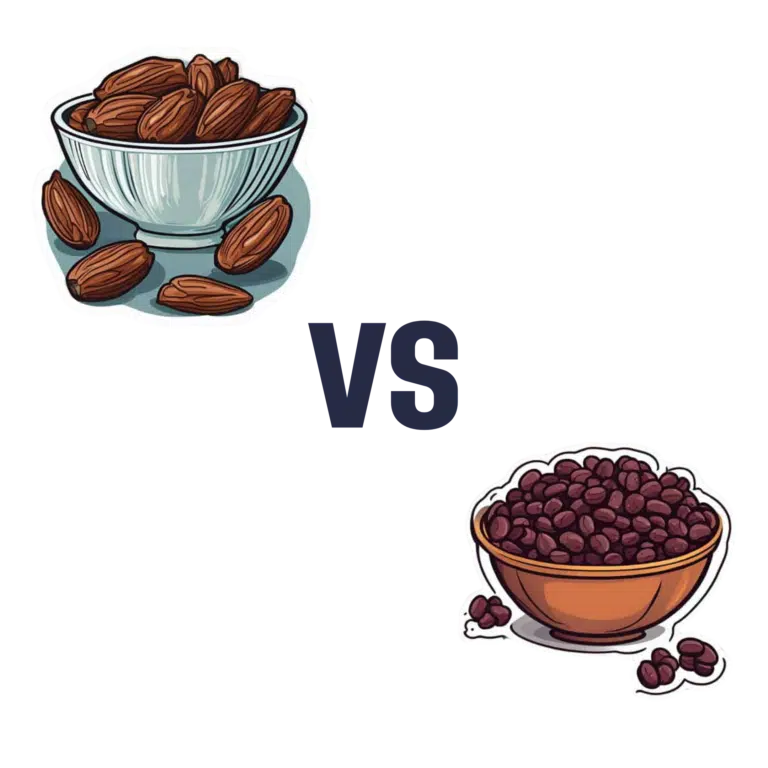
Acorns vs Chestnuts – Which is Healthier?
10almonds is reader-supported. We may, at no cost to you, receive a portion of sales if you purchase a product through a link in this article.

Our Verdict
When comparing acorns to chestnuts, we picked the acorns.
Why?
In terms of macros, chestnuts are mostly water, so it’s not surprising that acorns have a lot more carbs, fat, protein, and fiber. Thus, unless you have personal reasons for any of those to be a problem, acorns are the better choice, offering a lot more nutritional value.
In the category of vitamins, acorns lead with a lot more of vitamins A, B2, B3, B5, B6, and B9, while chestnuts have more of vitamins B1 and C. However, that vitamin C is useless to us, because it is destroyed in the cooking process (by boiling or roasting), and both of these nuts can be harmful if consumed raw, so that cooking does need to be done. That leaves acorns with a 6:1 lead.
When it comes to minerals, things are more even; acorns have more copper, magnesium, manganese, and zinc, while chestnuts have more calcium, iron, phosphorus, and potassium. Thus, a 4:4 tie (and yes, the margins of difference are approximately equal too).
We mentioned “both of these nuts can be harmful if consumed raw”, so a note on that: it’s because, while both contain an assortment of beneficial phytochemicals, they also both contain tannins that, if consumed raw, chelate with iron, essentially taking it out of our diet and potentially creating an iron deficiency. Cooking tannins stops this from being an issue, and the same cooking process renders the tannins actively beneficial to the health, for their antioxidant powers.
You may have heard that acorns are poisonous; that’s not strictly speaking true, except insofar as anything could be deemed poisonous in excess (including such things as water, and oxygen). Rather, it’s simply the above-described matter of the uncooked tannins and iron chelation. Even then, you’re unlikely to suffer ill effects unless you consume them raw in a fair quantity. While acorns have fallen from popular favor sufficient that one doesn’t see them in supermarkets, the fact is they’ve been enjoyed as an important traditional part of the diet by various indigenous peoples of N. America for centuries*, and provided they are cooked first, they are a good healthy food for most people.
*(going so far as to cultivate natural oak savannah areas, by burning out young oaks to leave the old ones to flourish without competition, to maximize acorn production, and then store dried acorns in bulk sufficient to cover the next year or so in case of a bad harvest later—so these was not just an incidental food, but very important “our life may depend on this” food. Much like grain in many places—and yes, acorns can be ground into flour and used to make bread etc too)
Do note: they are both still tree nuts though, so if you have a tree nut allergy, these ones aren’t for you.
Otherwise, enjoy both; just cook them first!
Want to learn more?
You might like to read:
Why You Should Diversify Your Nuts
Take care!
Don’t Forget…
Did you arrive here from our newsletter? Don’t forget to return to the email to continue learning!
Recommended
Learn to Age Gracefully
Join the 98k+ American women taking control of their health & aging with our 100% free (and fun!) daily emails: