
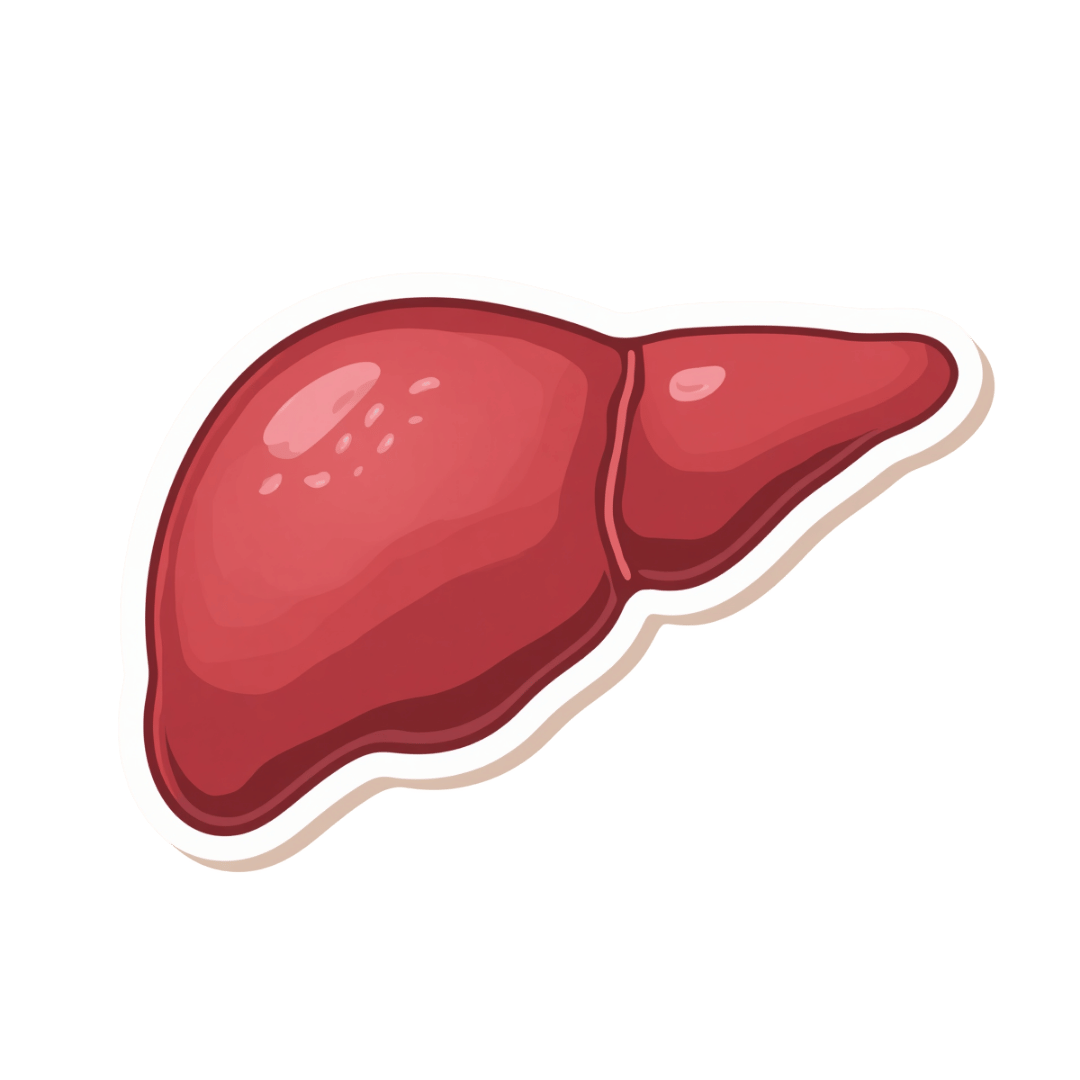
What Late-Night Snacking Can Do For Your Liver
10almonds is reader-supported. We may, at no cost to you, receive a portion of sales if you purchase a product through a link in this article.

…and other items from this week’s health science news:
It can make quite a difference
It’s often said that late-night snacking is bad for metabolic health, with a common claim being that it increases fat storage.
But what about the liver, specifically? Researchers analyzed self-reported diet and lifestyle data from almost 200,000 participants in three large US studies, including the Nurses’ Health Study and the Health Professionals Follow-up Study.
Of these, people who reported eating after dinner or after bedtime had a 20–30% higher rate of liver disease, including metabolic dysfunction-associated steatotic liver disease (formerly called fatty liver disease) and cirrhosis, compared with those who didn’t report late-night eating.
This is credible, as the liver is closely linked to the body’s internal clock, and eating during the biological night may thus indeed reduce the body’s ability to metabolize food efficiently.
That said, it’s self-reported data, so while it seems likely correct, do still take the details with a pinch of salt (and/but perhaps not salty snacks at bedtime):
Read in full: Late-night snacking may affect liver health
Related: The Other Circadian Rhythms
How are your electrolyte levels?
Should we supplement electrolytes? When do we need more sodium rather than less? Are we getting enough potassium? How’s our magnesium doing?
These and many other questions can come up a lot, especially in the context of exercise and/or hot weather.
Researchers (Dr. Isao Shitanta et al.) have a partial solution already—they’ve developed a wristwatch-type sensor that monitors sodium- and potassium-responsive signals in sweat in real time.
How it works: the device combines sodium- and potassium-selective electrodes, a fabric and superabsorbent-fiber layer to transport sweat, and digital electronics that transmit measurements wirelessly and store data on a micro-SD card.
The idea behind this is that this could be used to inform hydration management (i.e. do you need more water, do you need more potassium, do you need more sodium) for construction workers, manufacturing workers, athletes and people exercising outdoors and/or working in hot environments, particularly if (as the researchers are already looking towards) future versions combine electrolyte measurements with sweat volume and water intake:
Read in full: New wristwatch sensor monitors sweat electrolytes in real time
Related: Are Electrolyte Supplements Worth It?
Vaccination’s effects beyond infection risk
We’ve talked a bit about this before, but researchers (Dr. Paula Cebollada Rica et al.) have now shown how vaccination indeed appears to give benefits beyond merely reducing infection risk/severity, especially in the form of longer-lasting effects.
For example, in her mouse study with vaccinated and unvaccinated mice:
- unvaccinated mice recovering from an acute viral infection had an impaired immune system for quite a while, even after they’d successfully beaten the infection and recovered from the illness itself. In particular, this kind of unvaccinated recovery was associated with fibrosis and disrupted organization of the spleen, affecting interactions between immune cells needed to activate T-cells and thus weakening their ability to mount new immune responses
- their vaccinated neighbors, on the other hand (who were still carefully infected by the researchers, on a basis of “we will keep giving you this until the infection takes”), showed no comparable spleen alterations or T-cell dysfunction, retaining immune function similar to that of mice that had not been infected at all.
In other words, it strongly appears that vaccination can protect against longer-term immune consequences of acute viral infections, in addition to preventing the immediate disease:
Read in full: How the benefits of vaccination extend beyond protection from infection
Related: Vaccine Mythbusting
Take care!
Don’t Forget…
Did you arrive here from our newsletter? Don’t forget to return to the email to continue learning!
Recommended

Learn to Age Gracefully
Join the 98k+ American women taking control of their health & aging with our 100% free (and fun!) daily emails: