
The Real Cause Of Tight Hips
10almonds is reader-supported. We may, at no cost to you, receive a portion of sales if you purchase a product through a link in this article.

It’s about stability, before flexibility:
Time to leverage what you have
For most people, our hips feel tight not because they lack flexibility, but because our core isn’t giving the hips enough stability to move safely, so the tightness keeps returning.
Stretching feels good temporarily, but our hips tighten again when our core can’t control the pelvis, so the body “protects” the hips by limiting range.
Some exercises to fix that:
- Hip extension—dead bug: lie on your back with your legs at 90° and your arms above your shoulders, then slowly lower one arm and the opposite leg while keeping your abs tight and your lower back pressed into the floor—this teaches your hips to move while your pelvis stays controlled.
- Hip extension—bird dog: from all fours, brace your abs as if someone is about to poke your stomach, then extend one leg back and the opposite arm forwards while keeping your lower back still and your hips level—this connects your glutes with your deep core.
- Hip flexion—hollow hold with alternating hip flexion: lie flat, reach your arms overhead, tuck your pelvis, press your lower back into the floor, then lift and hold the hollow position while bending one leg at a time—your goal is to keep your body steady, not to lift high.
- Hip flexion—supine march with band: loop a light band around your feet, lie on your back, keep your lower back pressed down, then extend one leg forwards against the band while keeping your opposite leg completely still—this builds controlled hip flexion with deep-core support.
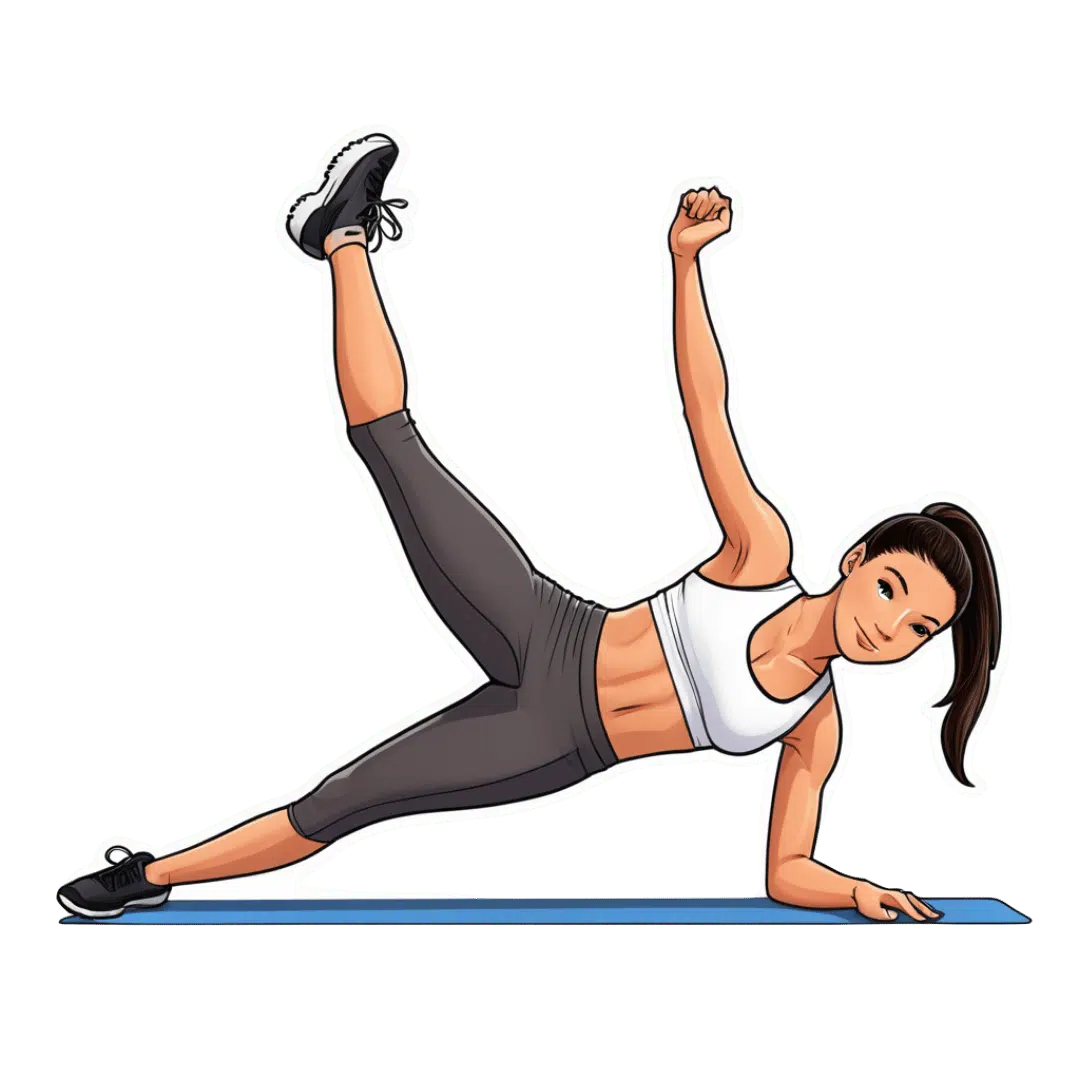
- Hip abduction—side plank with top-leg raise: hold a side plank on your forearm, lift your top leg slowly, and keep your core tight and your hips steady—this strengthens the muscles that open your hips without letting your pelvis wobble.
- Hip abduction—seated band abductions: sit tall with a band above your knees, press your knees outwards, and return slowly while keeping your pelvis still—this builds side-to-side hip control in a grounded position.
- Hip adduction—side-lying active internal rotation: lie on your side with your top leg bent at 90° in front of you, then rotate that leg so your foot lifts—this targets the small inner-hip stabilisers responsible for internal rotation and centred hip movement.
- Hip adduction—standing band adduction: attach a band to your ankle, stand tall, brace your abs, and pull your leg inwards without leaning or twisting—this trains real-world hip control for walking, running, and squatting.
For more on all of this plus visual demonstrations, enjoy:
Click Here If The Embedded Video Doesn’t Load Automatically!
Want to learn more?
You might also like:
The Most Underrated Hip Mobility Exercise (Not Stretching) ← if you only want to do one thing, not eight, then make this it 😎
Take care!
Don’t Forget…
Did you arrive here from our newsletter? Don’t forget to return to the email to continue learning!
Learn to Age Gracefully
Join the 98k+ American women taking control of their health & aging with our 100% free (and fun!) daily emails: