
Why do some people need less sleep than others? A gene variation could have something to do with it
10almonds is reader-supported. We may, at no cost to you, receive a portion of sales if you purchase a product through a link in this article.

Have you ever noticed how some people bounce out of bed after just a few hours of sleep, while others can barely function without a solid eight hours?
Take Margaret Thatcher, for example. The former British prime minister was known for sleeping just four hours a night. She worked late, rose early, and seemed to thrive on little sleep.
But for most of us, that kind of sleep schedule would be disastrous. We’d be groggy, unfocused, and reaching for sugary snacks and caffeinated drinks by mid-morning.
So why do some people seem to need less sleep than others? It’s a question that’s fascinated scientists for years. Here’s what we know so far.

Natural short sleepers
There is a small group of people who don’t need much sleep. We call them natural short sleepers. They can function perfectly well on just four to six hours of sleep each night, often for their entire lives.
Generally they don’t feel tired, they don’t nap, and they don’t suffer the usual negative consequences of sleep deprivation. Scientists call this the natural short sleep phenotype – a biological trait that allows people to get all the benefits of sleep in less time.
In 2010 researchers discovered genetic mutations that help explain this phenomenon. Natural short sleepers carry rare variants in certain genes, which seem to make their sleep more efficient.
More recently, a 2025 study assessed a woman in her 70s with one of these rare mutations. Despite sleeping just six hours a night for most of her life, she remained physically healthy, mentally sharp, and led a full, active life. Her body, it seems, was simply wired to need less sleep.
We’re still learning about how common these genetic mutations are and why they occur.
Not everyone who sleeps less is a natural short sleeper
But here’s the catch: most people who think they’re natural short sleepers aren’t. They’re just chronically sleep-deprived. Often, their short sleep is due to long work hours, social commitments, or a belief sleeping less is a sign of strength or productivity.
In today’s hustle culture, it’s common to hear people boast about getting by on only a few hours of sleep. But for the average person, that’s not sustainable.
The effects of short sleep build up over time, creating what’s known as a “sleep debt”. This can lead to poor concentration, mood swings, micro-sleeps (brief lapses into sleep), reduced performance and even long-term health risks. For example, short sleep has been linked to an increased risk of obesity, diabetes, high blood pressure and cardiovascular disease (heart disease and stroke).
The weekend catch-up dilemma
To make up for lost sleep during the week, many people try to “catch up” on weekends.
This can help repay some of the sleep debt that has accumulated in the short term. Research suggests getting one to two extra hours of sleep on the weekend or taking naps when possible may help reduce the negative effects of short sleep.
However, it’s not a perfect fix. Weekend catch-up sleep and naps may not fully resolve sleep debt. The topic remains one of ongoing scientific debate.
A recent large study suggested weekend catch-up sleep may not offset the cardiovascular risks associated with chronic short sleep.
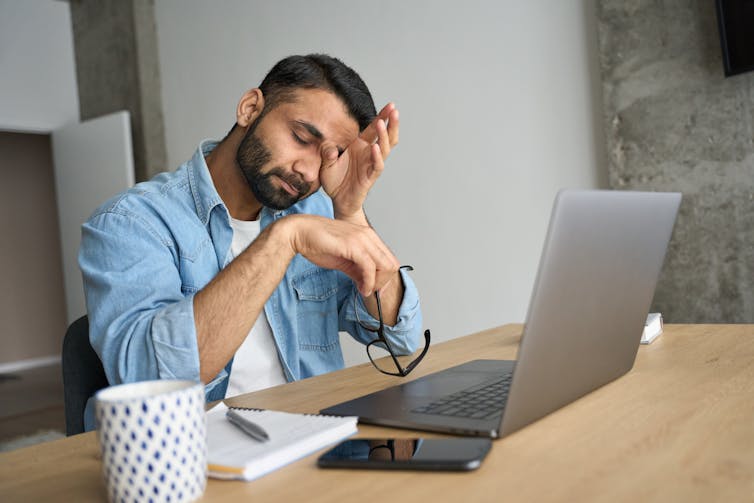
What’s more, large swings in sleep timing can disrupt your body’s internal clock, and sleeping in too much on weekends may make it harder to fall asleep on Sunday night, which can mean starting the working week less rested.
Increasing evidence indicates repeated cycles of irregular sleep may have an important influence on general health and the risk of early death, potentially even more so than how long we sleep for.
Ultimately, while moderate catch-up sleep might offer some benefits, it’s no substitute for consistent, high-quality sleep throughout the week. That said, maintaining such regularity can be particularly challenging for people with non-traditional schedules, such as shift workers.
So, was Thatcher a true natural short sleeper?
It’s hard to say. Some reports suggest she napped during the day in the back of a car between meetings. That could mean she was simply sleep-deprived and compensating for an accumulated sleep debt when she could.
Separate to whether someone is a natural short sleeper, there are a range of other reasons people may need more or less sleep than others. Factors such as age and underlying health conditions can significantly influence sleep requirements.
For example, older adults often experience changes in their circadian rhythms and are more likely to suffer from fragmented sleep due to conditions such as arthritis or cardiovascular disease.
Sleep needs vary from person to person, and while a lucky few can thrive on less, most of us need seven to nine hours a night to feel and function our best. If you’re regularly skimping on sleep and relying on weekends to catch up, it might be time to rethink your routine. After all, sleep isn’t a luxury – it’s a biological necessity.
Kelly Sansom, Research Associate, College of Medicine and Public Health, Flinders University; Research Associate, Centre for Healthy Ageing, Murdoch University and Peter Eastwood, Deputy Vice Chancellor, Research and Innovation, Murdoch University
This article is republished from The Conversation under a Creative Commons license. Read the original article.
Don’t Forget…
Did you arrive here from our newsletter? Don’t forget to return to the email to continue learning!
Recommended

Learn to Age Gracefully
Join the 98k+ American women taking control of their health & aging with our 100% free (and fun!) daily emails: