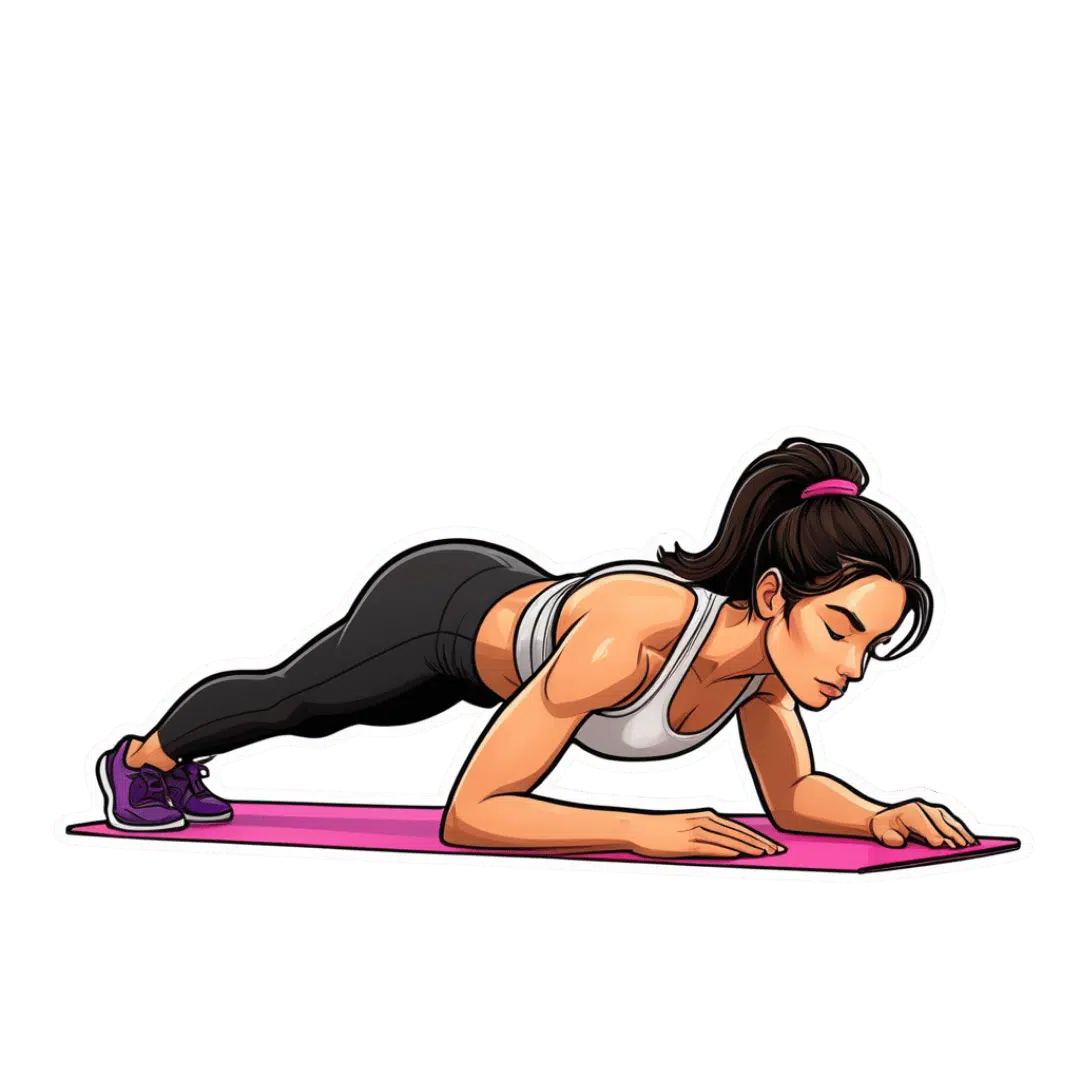
7 Comprehensive Ab Exercises

10almonds is reader-supported. We may, at no cost to you, receive a portion of sales if you purchase a product through a link in this article.

If you train just one motion, you’ll get just one motion’s benefit. Instead, here’s how to get a solidly strong core:

7 Up!

Cori Lefkowitz, of “Strong at Every Age”, advises:

  1. Weighted crunch (pullover variation): hold a weight overhead, brace your abs to keep your hips tilted towards your ribs; pull the weight down as you crunch your upper body and knees together, then extend back out without relaxing onto the ground.
  2. Leg lowers plus pelvic raise: squeeze your legs together and lower them slowly towards the ground while bracing your abs; lift them back up using your abs, then curl your pelvis off the floor before repeating.
  3. Slider body saw: start in a forearm plank on sliders, slide your body backwards into an extended plank without arching your lower back, then pull yourself forwards to the start position while keeping your hips level.
  4. Dip hold curl-up: support yourself on parallel bars, tuck your pelvis, round your spine, and curl your body upwards as though hollowing out your abs, rather than bending at your hips.
  5. Incline bench abs: lie on an incline bench holding the top, start with your knees bent; curl your knees towards your elbows by rounding your spine, then lower yourself back down slowly, keeping good control as you do so.
  6. Ab extensions: kneel with your glutes engaged and your hips tucked, then extend your arms forwards while maintaining a strong brace, and pull your hands back underneath you without letting your spine move.
  7. Bench V-ups: sit on a bench with your legs straight and hovering, lean backwards with good control, then crunch your torso and legs together by rounding your spine and pulling them towards each other.

For more on all of this plus visual demonstrations, enjoy:

Click Here If The Embedded Video Doesn’t Load Automatically!

Want to learn more?

You might also like:

Is A Visible Six-Pack Obtainable Regardless Of Genetic Predisposition?

Take care!

Don’t Forget…

Did you arrive here from our newsletter? Don’t forget to return to the email to continue learning!

Learn to Age Gracefully

Join the 98k+ American women taking control of their health & aging with our 100% free (and fun!) daily emails:

  • Guava vs Passion Fruit – Which is Healthier?

    10almonds is reader-supported. We may, at no cost to you, receive a portion of sales if you purchase a product through a link in this article.

    Our Verdict

    When comparing guava to passion fruit, we picked the guava.

    Why?

    There aren’t many fruits that can beat passion fruit for nutritional density! And even in this case, it wasn’t completely so in every category:

    In terms of macros, passion fruit has more carbs and fiber, the ratio of which give it the slightly lower glycemic index. Thus, a modest win for passion fruit in this category.

    In the category of vitamins, guava has more of vitamins B1, B5, B6, B9, C, E, and K, while passion fruit has more of vitamins A, B2, and B3. A clear win for guava this time.

    When it comes to minerals, it’s a little closer, but: guava has more calcium, copper, manganese, potassium, and zinc, while passion fruit has more iron, magnesium, and phosphorus. So, another win for guava.

    Adding up the sections makes for guava winning the day, but by all means enjoy either or both; diversity is good!

    Want to learn more?

    You might like to read:

    Fruit Is Healthy; Juice Isn’t (Here’s Why)

    Enjoy!

    Share This Post

  • Carrots vs Parsnips – Which is Healthier?

    10almonds is reader-supported. We may, at no cost to you, receive a portion of sales if you purchase a product through a link in this article.

    Our Verdict

    When comparing carrots to parsnips, we picked the parsnips.

    Why?

    There are arguments for both! But we say parsnips win on overall nutritional density.

    In terms of macros, parsnips vary quite a lot from region to another, but broadly speaking, parsnips have more carbs and fiber, and/but the ratios are such that carrots have the lower glycemic index. We’ll call this one a win for carrots.

    When it comes to vitamins, carrots have more of vitamins A, B2, B3, B6, and choline, while parsnips have more of vitamins B1, B5, B9, C, E, and K. A small win for parsnips here.

    In the category of minerals, carrots are not higher in any minerals, while parsnips are higher in calcium, copper, iron, magnesium, manganese, phosphorus, potassium, selenium, and zinc. An overwhelming win for parsnips.

    While the overall vitamin and mineral content puts parsnips ahead, it’s still worth noting that carrots have highly bioavailable megadoses of vitamin A.

    Another thing to note is that the glycemic index recorded for both is when peeled and boiled, whereas both of these root vegetables can be enjoyed raw if you wish, which has a much lower GI.

    In short, enjoy either or both, but parsnips are the more nutritionally dense overall.

    Want to learn more?

    You might like to read:

    Glycemic Index vs Glycemic Load vs Insulin Index

    Take care!

    Share This Post

  • Eat These 8 Anti-Inflammatory Foods for Healthy, Glowing Skin!

    10almonds is reader-supported. We may, at no cost to you, receive a portion of sales if you purchase a product through a link in this article.

    Dr. Shereene Idriss, dermatologist, advises:

    You are what you eat

    Literally, what we eat is what is used to make the substance of our bodies. So, with that in mind, quality is important! Items that can be particularly good for skin health and more, include:

    1. Fatty fish: wild salmon, mackerel, sardines, and Arctic char are rich in omega-3 fatty acids (EPA and DHA), which reduce inflammation and support skin, heart, and brain health—wild fish are preferred due to higher omega-3 and lower omega-6 content (as well as, importantly for other aspects of health, a much lower antibiotics content).
    2. Berries: blueberries, blackberries, raspberries, and strawberries contain anthocyanins, polyphenols, and vitamin C that help repair UV damage, boost collagen, and protect skin.
    3. Leafy greens: kale, spinach, and Swiss chard are packed with chlorophyll and vitamins A, C, E, and K, supporting cell turnover, wound healing, and improved blood circulation for brighter, healthier skin.
    4. Turmeric: contains curcumin, a potent anti-inflammatory compound that is best paired with black pepper (piperine) for the best absorption into the body.
    5. Green tea: loaded with polyphenols including EGCG, it reduces free radicals, prevents collagen breakdown, regulates oil production, and supports UV protection—also effective when used topically.
    6. Avocados: rich in monounsaturated fats, vitamin E, and glutathione, they strengthen the skin barrier, reduce hyperpigmentation, and protect against oxidative stress.
    7. Walnuts: a top plant source of omega-3 ALA, plus zinc, selenium, and vitamin E, all of which help reduce inflammation and support skin healing and repair.
    8. Sweet potatoes: high in beta-carotene, which converts to vitamin A (retinol) to promote collagen production, cell turnover, and a natural glow—best consumed with the skin for max nutrients (cook it first, though!).

    For more on all of this, enjoy:

    Click Here If The Embedded Video Doesn’t Load Automatically!

    Want to learn more?

    You might also like:

    The Best Foods For Collagen Production

    Take care!

    Share This Post

  • It’s OK That You’re Not OK – by Megan Devine

    10almonds is reader-supported. We may, at no cost to you, receive a portion of sales if you purchase a product through a link in this article.

    Firstly, be aware: this is not a cheerful book. If you’re looking for something to life your mood after a loss, it will not be this.

    What, then, will you find? A reminder that grief is also the final translation of love, and not necessarily something to be put aside as quickly as possible—or even ever, if we don’t want to.

    Too often, society (and even therapists) will correctly note that no two instances of grief are the same (after all, no two people are, so definitely no two relationships are, so how could two instances of grief be?), but will still expect that if most people can move on quickly from most losses, that you should too, and that if you don’t then there is something pathological at hand that needs fixing.

    Part one of the book covers this (and more) in a lot of detail; critics have called it a diatribe against the current status quo in the field of grief.

    Part two of the book is about “what to do with your grief”, and addresses the reality of grief, how (and why) to stay alive when not doing so feels like a compelling option, dealing with grief’s physical side effects, and calming your mind in ways that actually work (without trying to sweep your grief under a rug).

    Parts three and four are more about community—how to navigate the likely unhelpful efforts a lot of people may make in the early days, and when it comes to those people who can and will actually be a support, how to help them to help you.

    In the category of criticism, she also plugs her own (paid, subscription-based) online community, which feels a little mercenary, especially as while community definitely can indeed help, the prospect of being promptly exiled from it if you stop paying, doesn’t.

    Bottom line: if you have experienced grief and felt like moving on was the right thing to do, then this book isn’t the one for you. If, on the other hand, your grief feels more like something you will carry just as you carry the love you feel for them, then you’ll find a lot about that here.

    Click here to check out “It’s OK That You’re Not OK”, and handle your grief in the way that makes sense to you.

    Don’t Forget…

    Did you arrive here from our newsletter? Don’t forget to return to the email to continue learning!

    Learn to Age Gracefully

    Join the 98k+ American women taking control of their health & aging with our 100% free (and fun!) daily emails:

  • Paving The Way To Good Health

    10almonds is reader-supported. We may, at no cost to you, receive a portion of sales if you purchase a product through a link in this article.

    This is Dr. Michelle Tollefson. She’s a gynecologist, and a menopause and lifestyle medicine expert. She’s also a breast cancer survivor, and, indeed, thriver.

    So, what does she want us to know?

    A Multivector Approach To Health

    There’s a joke that goes: a man is trapped in a flooding area, and as the floodwaters rise, he gets worried and begins to pray, but he is interrupted when some people come by on a raft and offer him to go with them. He looks at the rickety raft and says “No, you go on, God will spare me”. He returns to his prayer, and is further interrupted by a boat and finally a helicopter, and each time he gives the same response. He drowns, and in the afterlife he asks God “why didn’t you spare me from the flood?”, and God replies “I sent a raft, a boat, and a helicopter; what more did you want?!”

    People can be a bit the same when it comes to different approaches to cancer and other serious illness. They are offered chemotherapy and say “No, thank you, eating fruit will spare me”.

    Now, this is not to trivialize those who decline aggressive cancer treatments for other reasons such as “I am old and would rather not go through that; I’d rather have a shorter life without chemo than a longer life with it”—for many people that’s a valid choice.

    But it is to say: lifestyle medicine is, mostly, complementary medicine.

    It can be very powerful! It can make the difference between life and death! Especially when it comes to things like cancer, diabetes, heart disease, etc.

    But it’s not a reason to decline powerful medical treatments if/when those are appropriate. For example, in Dr. Tollefson’s case…

    Synergistic health

    Dr. Tollefson, herself a lifestyle medicine practitioner and gynecologist (and having thus done thousands of clinical breast exams for other people, screening for breast cancer), says she owes her breast cancer survival to two things, or rather two categories of things:

    1. a whole-food, plant predominant diet, daily physical activity, prioritizing sleep, minimizing stress, and a strong social network
    2. a bilateral mastectomy, 16 rounds of chemotherapy, removal of her ovaries, and several reconstructive surgeries

    Now, one may wonder: if the first thing is so good, why need the second?

    Or on the flipside: if the second thing was necessary, what was the point of the first?

    And the answer she gives is: the first thing was the reason she was able to make it through the second thing.

    And on the next level: the second thing was the reason she’s still around to talk about the first thing.

    In other words: she couldn’t have done it with just one or the other.

    A lot of medicine in general, and lifestyle medicine in particular, is like this. If we note that such-and-such a thing decreases our risk of cancer mortality by 4%, that’s a small decrease, but it can add up (and compound!) if it’s surrounded by other things that also each decrease the risk by 12%, 8%, 15%, and so on.

    Nor is this only confined to cancer, nor only to the positives.

    Let’s take cardiovascular disease: if a person smokes, drinks, eats red meat, stresses, and has a wild sleep schedule, you can imagine those risk factors add up and compound.

    If this person and another with a heart-healthy lifestyle both have a stroke (it can happen to anyone, even if it’s less likely in this case), and both need treatment, then two things are true:

    • They are both still going to need treatment (medicines, and possibly a thrombectomy)
    • The second person is most likely to recover, and most likely to recover more quickly and easily

    The second person can be said to have paved the way to their recovery, with their lifestyle.

    Which is really important, because a lot of people think “what’s the point in living so healthily if [disease] strikes anyway?” and the answer is:

    A very large portion of your recovery is predicated on how you lived your life before The Bad Thing™ happened, and that can be the difference between bouncing back quickly and a long struggle back to health.

    Or the difference between a long struggle back to health, or a short struggle followed by rapid decline and death.

    In short:

    Play the odds, improve your chances with lifestyle medicine. Enjoy those cancer-fighting fruits:

    Top 8 Fruits That Prevent & Kill Cancer

    …but also, get your various bits checked when appropriate; we know, mammograms and prostate checks etc are not usually the highlight of most people’s days, but they save lives. And if it turns out you need serious medical interventions, consider them seriously.

    And, by all means, enjoy mood-boosting nutraceuticals such as:

    12 Foods That Fight Depression & Anxiety

    …but also recognize that sometimes, your brain might have an ongoing biochemical problem that a tablespoon of pumpkin seeds isn’t going to fix.

    And absolutely, you can make lifestyle adjustments to reduce the risks associated with menopause, for example:

    Menopause, & How Lifestyle Continues To Matter “Postmenopause”

    …but also be aware that if the problem is “not enough estrogen”, sometimes to solution is “take estrogen”.

    And so on.

    Want to know Dr. Tollefson’s lifestyle recommendations?

    Most of them will not be a surprise to you, and we mentioned some of them above (a whole-food, plant predominant diet, daily physical activity, prioritizing sleep, minimizing stress, and a strong social network), but for more specific recommendations, including numbers etc, enjoy:

    Click Here If The Embedded Video Doesn’t Load Automatically!

    Take care!

    Don’t Forget…

    Did you arrive here from our newsletter? Don’t forget to return to the email to continue learning!

    Learn to Age Gracefully

    Join the 98k+ American women taking control of their health & aging with our 100% free (and fun!) daily emails:

  • It’s Not Hysteria – by Dr. Karen Tan

    10almonds is reader-supported. We may, at no cost to you, receive a portion of sales if you purchase a product through a link in this article.

    Firstly, who this book is aimed at: in case it wasn’t clear, this book assumes you have, or at least have had, a uterus. If that’s not you, then well, it’ll still be an interesting read but it won’t be about your reproductive health.

    Secondly, about that “reproductive health”: it’s mostly not actually about reproductive health literally, but rather, the health of one’s reproductive organs and the things that they affect—which is a lot more than the ability to reproduce!

    Dr. Tang takes us on a (respectably in-depth) tour of the relevant anatomy, before moving on to physiology, before continuing to pathology (i.e. things that can go wrong, and often do), and finally various treatment options, including elective procedures, and the pros and cons thereof.

    She also talks the reader through talking about things with gynecologists and other healthcare providers, and making sure concerns are not dismissed out-of-hand (something that happens a lot, of course).

    The style throughout is quite detailed prose, but without being difficult at all to read, and (assuming one is interested in the topic) it’s very engaging.

    Bottom line: if you would like to know more about uteri and everything that is (or commonly/unfortunately) can be attached to them, the effects they have on the rest of the body and health, and what can be done about things not being quite right, then this is a good book for that.

    Click here to check out It’s Not Hysteria, and understand more of what’s going on down there!

    Don’t Forget…

    Did you arrive here from our newsletter? Don’t forget to return to the email to continue learning!

    Learn to Age Gracefully

    Join the 98k+ American women taking control of their health & aging with our 100% free (and fun!) daily emails: