
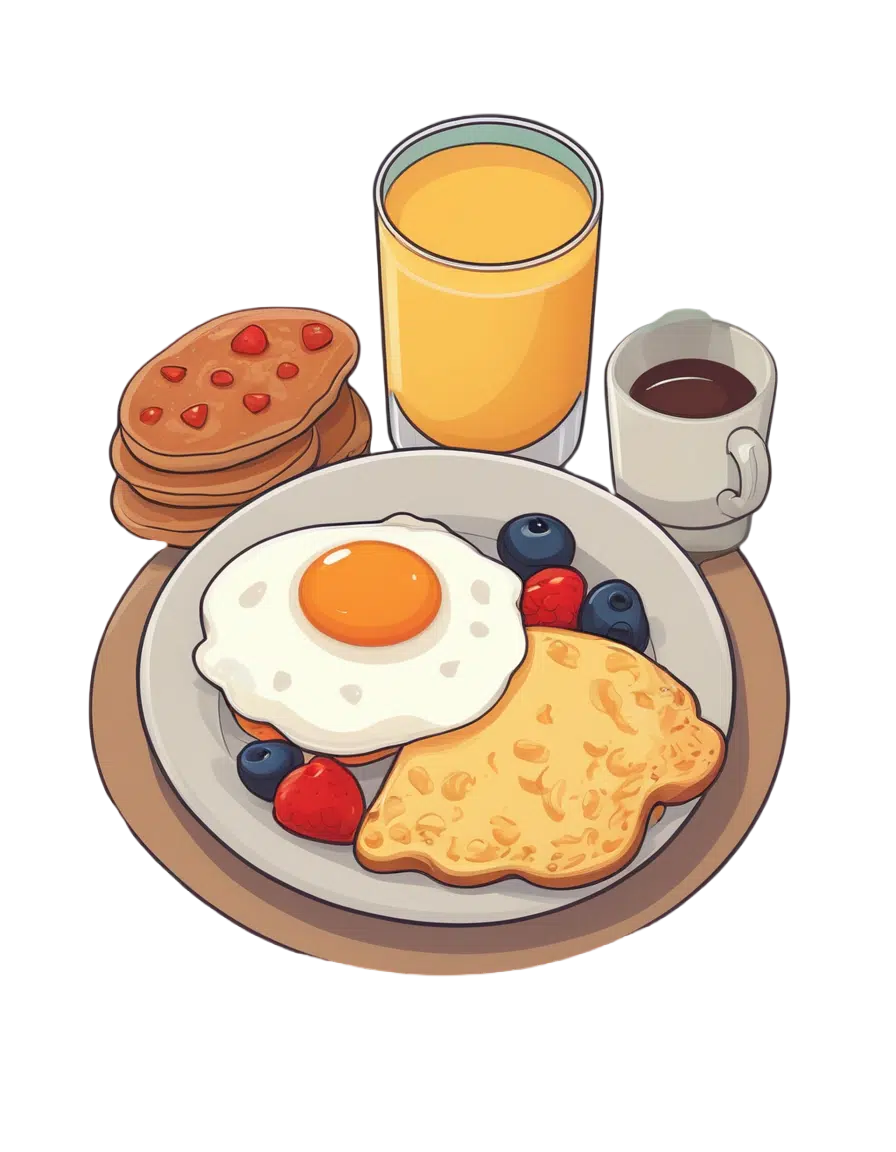
10 Healthiest Foods You Should Eat In The Morning
10almonds is reader-supported. We may, at no cost to you, receive a portion of sales if you purchase a product through a link in this article.
For many of us, our creative minds aren’t their absolute best first thing in the morning, and it’s easy to reach for what’s available, if we haven’t planned ahead.
So here’s some inspiration for the coming week! If you’re a regular coffee-and-toast person, at least consider alternating some of these with that:
- Oatmeal with fresh fruit: fiber, energy, protein, vitamins and minerals (10almonds tip: we recommend making it as overnight oats! Same nutrients, lower glycemic index)
- Greek yogurt parfait: probiotic gut benefits, along with all the goodness of fruit
- Avocado toast: so many nutrients; most famous for the healthy fats, but there’s lots more in there too!
- Egg + vegetable scramble: protein, healthy fats, vitamins and minerals, fiber
- Smoothie bowl: many nutrients—But be aware that blending will reduce fiber and make the sugar quicker to enter your bloodstream. Still not bad as an occasional feature for the sake of variety, though!
- Wholegrain pancakes: energy, fiber, and whatever your toppings! Fresh fruit is a top-tier choice; the video suggests maple syrup; we however invite you to try aged balsamic vinegar instead (sounds unlikely, we know, but try it and you’ll see; it is so delicious and your blood sugars will thank you too!)
- Chia pudding: so many nutrients in this one; chia seeds are incredible!
- Quinoa breakfast bowl: the healthy grains are a great start to the day, and contain a fair bit of protein too, and served with nuts, seeds, and diced fruit, many more nutrients get added to the mix. Unclear why the video-makers want to put honey or maple syrup on everything.
- Berries: lots of vitamins, fiber, hydration, and very many polyphenols
For a quick visual overview, and a quick-start preparation guide for the ones that aren’t just “berries” or similar, enjoy this short (3:11) video:
Click Here If The Embedded Video Doesn’t Load Automatically!
PS: They said 10, and we only counted 9. Where is the tenth one? Who would say “10 things” and then ostensibly only have 9? Who would do such a thing?!
About that chia pudding…
It’s a great way to get a healthy dose of protein, healthy fats, antioxidants, and a lot of other benefits for the heart and brain:
The Tiniest Seeds With The Most Value
Enjoy!
Don’t Forget…
Did you arrive here from our newsletter? Don’t forget to return to the email to continue learning!
Recommended
Learn to Age Gracefully
Join the 98k+ American women taking control of their health & aging with our 100% free (and fun!) daily emails:
-
What’s the difference between shyness and social anxiety?
10almonds is reader-supported. We may, at no cost to you, receive a portion of sales if you purchase a product through a link in this article.
What’s the difference? is a new editorial product that explains the similarities and differences between commonly confused health and medical terms, and why they matter.
The terms “shyness” and “social anxiety” are often used interchangeably because they both involve feeling uncomfortable in social situations.
However, feeling shy, or having a shy personality, is not the same as experiencing social anxiety (short for “social anxiety disorder”).
Here are some of the similarities and differences, and what the distinction means.
pathdoc/Shutterstock How are they similar?
It can be normal to feel nervous or even stressed in new social situations or when interacting with new people. And everyone differs in how comfortable they feel when interacting with others.
For people who are shy or socially anxious, social situations can be very uncomfortable, stressful or even threatening. There can be a strong desire to avoid these situations.
People who are shy or socially anxious may respond with “flight” (by withdrawing from the situation or avoiding it entirely), “freeze” (by detaching themselves or feeling disconnected from their body), or “fawn” (by trying to appease or placate others).
A complex interaction of biological and environmental factors is also thought to influence the development of shyness and social anxiety.
For example, both shy children and adults with social anxiety have neural circuits that respond strongly to stressful social situations, such as being excluded or left out.
People who are shy or socially anxious commonly report physical symptoms of stress in certain situations, or even when anticipating them. These include sweating, blushing, trembling, an increased heart rate or hyperventilation.
How are they different?
Social anxiety is a diagnosable mental health condition and is an example of an anxiety disorder.
For people who struggle with social anxiety, social situations – including social interactions, being observed and performing in front of others – trigger intense fear or anxiety about being judged, criticised or rejected.
To be diagnosed with social anxiety disorder, social anxiety needs to be persistent (lasting more than six months) and have a significant negative impact on important areas of life such as work, school, relationships, and identity or sense of self.
Many adults with social anxiety report feeling shy, timid and lacking in confidence when they were a child. However, not all shy children go on to develop social anxiety. Also, feeling shy does not necessarily mean a person meets the criteria for social anxiety disorder.
People vary in how shy or outgoing they are, depending on where they are, who they are with and how comfortable they feel in the situation. This is particularly true for children, who sometimes appear reserved and shy with strangers and peers, and outgoing with known and trusted adults.
Individual differences in temperament, personality traits, early childhood experiences, family upbringing and environment, and parenting style, can also influence the extent to which people feel shy across social situations.
Not all shy children go on to develop social anxiety. 249 Anurak/Shutterstock However, people with social anxiety have overwhelming fears about embarrassing themselves or being negatively judged by others; they experience these fears consistently and across multiple social situations.
The intensity of this fear or anxiety often leads people to avoid situations. If avoiding a situation is not possible, they may engage in safety behaviours, such as looking at their phone, wearing sunglasses or rehearsing conversation topics.
The effect social anxiety can have on a person’s life can be far-reaching. It may include low self-esteem, breakdown of friendships or romantic relationships, difficulties pursuing and progressing in a career, and dropping out of study.
The impact this has on a person’s ability to lead a meaningful and fulfilling life, and the distress this causes, differentiates social anxiety from shyness.
Children can show similar signs or symptoms of social anxiety to adults. But they may also feel upset and teary, irritable, have temper tantrums, cling to their parents, or refuse to speak in certain situations.
If left untreated, social anxiety can set children and young people up for a future of missed opportunities, so early intervention is key. With professional and parental support, patience and guidance, children can be taught strategies to overcome social anxiety.
Why does the distinction matter?
Social anxiety disorder is a mental health condition that persists for people who do not receive adequate support or treatment.
Without treatment, it can lead to difficulties in education and at work, and in developing meaningful relationships.
Receiving a diagnosis of social anxiety disorder can be validating for some people as it recognises the level of distress and that its impact is more intense than shyness.
A diagnosis can also be an important first step in accessing appropriate, evidence-based treatment.
Different people have different support needs. However, clinical practice guidelines recommend cognitive-behavioural therapy (a kind of psychological therapy that teaches people practical coping skills). This is often used with exposure therapy (a kind of psychological therapy that helps people face their fears by breaking them down into a series of step-by-step activities). This combination is effective in-person, online and in brief treatments.
Treatment is available online as well as in-person. ImYanis/Shutterstock For more support or further reading
Online resources about social anxiety include:
- This Way Up’s online program for managing excessive shyness and fear of social situations
- Beyond Blue’s resources on social anxiety
- a guide to looking after yourself if you have social anxiety, from the Western Australian health department
- social anxiety online program for children and teens from the University of Queensland
- inroads, a self-guided online program for young adults who drink alcohol to manage their anxiety.
We thank the Black Dog Institute Lived Experience Advisory Network members for providing feedback and input for this article and our research.
Kayla Steele, Postdoctoral research fellow and clinical psychologist, UNSW Sydney and Jill Newby, Professor, NHMRC Emerging Leader & Clinical Psychologist, UNSW Sydney
This article is republished from The Conversation under a Creative Commons license. Read the original article.
Share This Post
-
If Retinal Is Messing Up Your Skin…
10almonds is reader-supported. We may, at no cost to you, receive a portion of sales if you purchase a product through a link in this article.
Dr. Andrea Suarez helps us put it right:
Retin-ouch?
First, what it is: retinal (retinaldehyde) is a topical vitamin A derivative that increases cell turnover, thus rejuvenating the skin, and as such can improve the appearance of fine lines, uneven texture, and pigmentation. although it requires one fewer conversion step in the skin than retinol and thus is generally considered more effective*, both can improve visible signs of aging and support collagen production with consistent use.
*Which can be a good or bad thing depending on your skin; sometimes more effective is not what you want, when it comes to a product whose mechanism of action involves irritating the cells enough to get your body to jettison them in favor of new ones!
Now, as retinal increases skin-cell turnover, it temporarily raises transepidermal water loss, which can lead to dryness, peeling, flaking, stinging, and sensitivity during the first few months. Lifestyle factors such as hot showers, heaters, fireplaces, alcohol consumption, and overwashing can make these effects worse.
So, to support your skin while that happens, it can be a good to use only a gentle cleanser, thoroughly rinse away cleanser residue, consider double cleansing with an oil cleanser followed by a mild cream cleanser when removing makeup (if you wear such), apply moisturizers containing ceramides, use a richer moisturizer or occlusive ointment at night if tolerated, run a humidifier while sleeping (if appropriate for your climate), and avoid exfoliating more than necessary.
You can also make things easier for your skin if you:
- start just a few nights per week and gradually increase towards nightly use
- avoid alternating between multiple retinoids
- use the moisturizer-retinal-moisturizer “sandwich method”
- protect sensitive areas such as your eyelids, lips, neck, and earlobe creases with petroleum jelly
- consider short-contact therapy by rinsing retinal off after about 30 minutes if your skin is highly sensitive
- apply only enough product to form a thin film!
For more on all of this plus some visual illustrations, enjoy:
Click Here If The Embedded Video Doesn’t Load Automatically!
Want to learn more?
You might also like:
Retinoids: Retinol vs Retinal vs Retinoic Acid vs..? ← for demystifying this list of similar-sounding words and what they all mean and what it means for you 😎
Take care!
Share This Post
-
What’s the difference between a heart attack and cardiac arrest? One’s about plumbing, the other wiring
10almonds is reader-supported. We may, at no cost to you, receive a portion of sales if you purchase a product through a link in this article.
In July 2023, rising US basketball star Bronny James collapsed on the court during practice and was sent to hospital. The 18-year-old athlete, son of famous LA Lakers’ veteran LeBron James, had experienced a cardiac arrest.
Many media outlets incorrectly referred to the event as a “heart attack” or used the terms interchangeably.
A cardiac arrest and a heart attack are distinct yet overlapping concepts associated with the heart.
With some background in how the heart works, we can see how they differ and how they’re related.
Explode/Shutterstock Understanding the heart
The heart is a muscle that contracts to work as a pump. When it contracts it pushes blood – containing oxygen and nutrients – to all the tissues of our body.
For the heart muscle to work effectively as a pump, it needs to be fed its own blood supply, delivered by the coronary arteries. If these arteries are blocked, the heart muscle doesn’t get the blood it needs.
This can cause the heart muscle to become injured or die, and results in the heart not pumping properly.
Heart attack or cardiac arrest?
Simply put, a heart attack, technically known as a myocardial infarction, describes injury to, or death of, the heart muscle.
A cardiac arrest, sometimes called a sudden cardiac arrest, is when the heart stops beating, or put another way, stops working as an effective pump.
In other words, both relate to the heart not working as it should, but for different reasons. As we’ll see later, one can lead to the other.
Why do they happen? Who’s at risk?
Heart attacks typically result from blockages in the coronary arteries. Sometimes this is called coronary artery disease, but in Australia, we tend to refer to it as ischaemic heart disease.
The underlying cause in about 75% of people is a process called atherosclerosis. This is where fatty and fibrous tissue build up in the walls of the coronary arteries, forming a plaque. The plaque can block the blood vessel or, in some instances, lead to the formation of a blood clot.
Atherosclerosis is a long-term, stealthy process, with a number of risk factors that can sneak up on anyone. High blood pressure, high cholesterol, diet, diabetes, stress, and your genes have all been implicated in this plaque-building process.
Other causes of heart attacks include spasms of the coronary arteries (causing them to constrict), chest trauma, or anything else that reduces blood flow to the heart muscle.
Regardless of the cause, blocking or reducing the flow of blood through these pipes can result in the heart muscle not receiving enough oxygen and nutrients. So cells in the heart muscle can be injured or die.
Here’s a simple way to remember the difference. Author provided But a cardiac arrest is the result of heartbeat irregularities, making it harder for the heart to pump blood effectively around the body. These heartbeat irregularities are generally due to electrical malfunctions in the heart. There are four distinct types:
- ventricular tachycardia: a rapid and abnormal heart rhythm in which the heartbeat is more than 100 beats per minute (normal adult, resting heart rate is generally 60-90 beats per minute). This fast heart rate prevents the heart from filling with blood and thus pumping adequately
- ventricular fibrillation: instead of regular beats, the heart quivers or “fibrillates”, resembling a bag of worms, resulting in an irregular heartbeat greater than 300 beats per minute
- pulseless electrical activity: arises when the heart muscle fails to generate sufficient pumping force after electrical stimulation, resulting in no pulse
- asystole: the classic flat-line heart rhythm you see in movies, indicating no electrical activity in the heart.
Remember this flat-line rhythm from the movies? It’s asystole, when there’s no electrical activity in the heart. Kateryna Kon/Shutterstock Cardiac arrest can arise from numerous underlying conditions, both heart-related and not, such as drowning, trauma, asphyxia, electrical shock and drug overdose. James’ cardiac arrest was attributed to a congenital heart defect, a heart condition he was born with.
But among the many causes of a cardiac arrest, ischaemic heart disease, such as a heart attack, stands out as the most common cause, accounting for 70% of all cases.
So how can a heart attack cause a cardiac arrest? You’ll remember that during a heart attack, heart muscle can be damaged or parts of it may die. This damaged or dead tissue can disrupt the heart’s ability to conduct electrical signals, increasing the risk of developing arrhythmias, possibly causing a cardiac arrest.
So while a heart attack is a common cause of cardiac arrest, a cardiac arrest generally does not cause a heart attack.
What do they look like?
Because a cardiac arrest results in the sudden loss of effective heart pumping, the most common signs and symptoms are a sudden loss of consciousness, absence of pulse or heartbeat, stopping of breathing, and pale or blue-tinged skin.
But the common signs and symptoms of a heart attack include chest pain or discomfort, which can show up in other regions of the body such as the arms, back, neck, jaw, or stomach. Also frequent are shortness of breath, nausea, light-headedness, looking pale, and sweating.
What’s the take-home message?
While both heart attack and cardiac arrest are disorders related to the heart, they differ in their mechanisms and outcomes.
A heart attack is like a blockage in the plumbing supplying water to a house. But a cardiac arrest is like an electrical malfunction in the house’s wiring.
Despite their different nature both conditions can have severe consequences and require immediate medical attention.
Michael Todorovic, Associate Professor of Medicine, Bond University and Matthew Barton, Senior lecturer, School of Nursing and Midwifery, Griffith University
This article is republished from The Conversation under a Creative Commons license. Read the original article.
Share This Post
Related Posts
-
7 Less Common Sleep Tips
10almonds is reader-supported. We may, at no cost to you, receive a portion of sales if you purchase a product through a link in this article.
We all know about having a regular sleep schedule in a cool dark room and clean bedding and, shockingly, not taking stimulants before bedtime. Hopefully we all know alcohol is bad, too. So, what else?
Sweet dreams
Dr. Michael Breus, sleep specialist, advises:
- Do an eye relaxation exercise (“cupping” or “palming”) by placing warm palms over your open eyes to relieve eye strain and promote relaxation before bed.
- Apply a warm compress to your eyes for 3–5 minutes to reduce eye strain, boost circulation, and support relaxation.
- Wear socks to bed or warm your feet with a heating pad or foot bath to improve circulation and help regulate body temperature for better sleep.
- Sleep on your back (if comfortable) or your left side to reduce pressure on joints, aid digestion, and support heart health*.
- Avoid long daytime naps—keep them under 30 minutes and before 14:00, to maintain a healthy sleep drive at night.
- Review all medications and supplements with your doctor or pharmacist to identify anything that may be interfering with sleep.
- Invest in a high-quality, supportive pillow tailored to your sleep position to improve comfort, spinal alignment, and sleep quality (this writer has one like this example product on Amazon, and loves it!).
*Here we remember that Dr. Breus is a PhD (specifically: a sleep scientist), not an MD, and his advice in the case of #4 is the opposite of what is generally considered best for heart health and brain health (the latter in the context of the glymphatic system and the brain’s natural defenses against neurodegeneration). As for digestion, that will work the same any way around because of the peristaltic motion of the intestines, so he’s wrong about that too, but he was correct about one thing: left-side sleeping will ease the symptoms of acid reflux, if you have acid reflux. For everything else, right-side sleeping is better, and you can read about it in our link in the “Want to know more?” section.
For more on each of these, enjoy:
Click Here If The Embedded Video Doesn’t Load Automatically!
Want to learn more?
You might also like:
- Sleeping Positions & Your Heart & Brain ← for the science on this
- And as for that about reducing pressure on joints, what we’d suggest is making sure you have the right mattress: What Mattress Is Best, By Science?
Take care!
Don’t Forget…
Did you arrive here from our newsletter? Don’t forget to return to the email to continue learning!
Learn to Age Gracefully
Join the 98k+ American women taking control of their health & aging with our 100% free (and fun!) daily emails:
-
Little Treatments, Big Effects – by Dr. Jessica Schleider
10almonds is reader-supported. We may, at no cost to you, receive a portion of sales if you purchase a product through a link in this article.
The author, a clinical psychologist, discusses how mental healthcare has come a very long way, yet still has a long way to go. While advocating for top-down reforms, she does have a stopgap solution:
Find ways to significantly improve people’s mental health in a single-session intervention.
This seems like a tall order, but her method is based on good science, and also, most people will agree from experience that big changes can happen to someone in the space of moments, at pivotal turning points in life—they just have to be the right moments.
Dr. Schleider recommends that therapists train in (and then offer) this method, but she does also give comprehensive advice for self-therapy of this kind too.
These self-therapy directions, ways to induce those life-pivoting moments for the better, are perhaps the greatest value that the book gives us.
Bottom line: if you’d like a lot of the benefits of therapy without getting therapy, this book can definitely point you in the right direction, in a manner that won’t be a drain on your time or your wallet.
Don’t Forget…
Did you arrive here from our newsletter? Don’t forget to return to the email to continue learning!
Learn to Age Gracefully
Join the 98k+ American women taking control of their health & aging with our 100% free (and fun!) daily emails:
-
Natural Remedies and Foods for Osteoarthritis
10almonds is reader-supported. We may, at no cost to you, receive a portion of sales if you purchase a product through a link in this article.
It’s Q&A Day at 10almonds!
Have a question or a request? You can always hit “reply” to any of our emails, or use the feedback widget at the bottom!
In cases where we’ve already covered something, we might link to what we wrote before, but will always be happy to revisit any of our topics again in the future too—there’s always more to say!
As ever: if the question/request can be answered briefly, we’ll do it here in our Q&A Thursday edition. If not, we’ll make a main feature of it shortly afterwards!
So, no question/request too big or small
❝Natural solutions for osteoarthritis. Eg. Rosehip tea, dandelion root tea. Any others??? What foods should I absolutely leave alone?❞
We’ll do a main feature on arthritis (in both its main forms) someday soon, but meanwhile, we recommend eating for good bone/joint health and against inflammation. To that end, you might like these main features we did on those topics:
- We Are Such Stuff As Fish Are Made Of (collagen for bone and joint health)
- The Bare-Bones Truth About Osteoporosis (eating for bone health generally)
- Keep Inflammation At Bay (dietary tips for minimizing inflammation—also, our all-time most popular article to date!)
Of these, probably the last one is the most critical, and also will have the speediest effects if implemented.
Don’t Forget…
Did you arrive here from our newsletter? Don’t forget to return to the email to continue learning!
Learn to Age Gracefully
Join the 98k+ American women taking control of their health & aging with our 100% free (and fun!) daily emails:


