
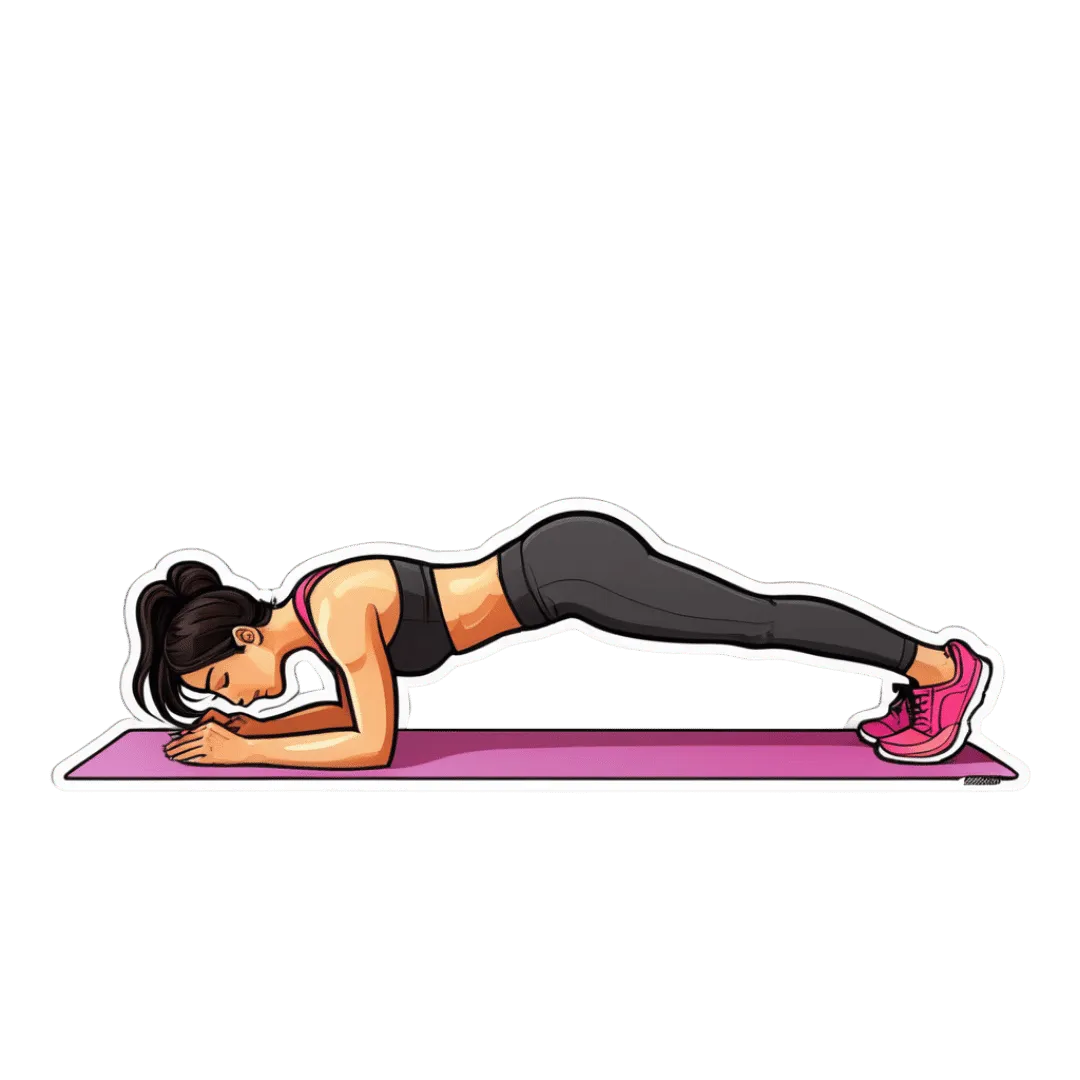
The Most Underrated Plank Exercise For Best Benefits
10almonds is reader-supported. We may, at no cost to you, receive a portion of sales if you purchase a product through a link in this article.

It’s very simple, but makes a big difference:
More muscles, more complete exercise
First, a note on nomenclature: she calls this a “plange plank”, but searching the Internet suggests that only she calls it that. Our best guess is that she heard it called a “planche” and miss-guessed the spelling, but “planche” is simply the French word for “plank”. So there’s that.
Now, how to do it: start in a forearm plank, push the ground away with your forearms so your shoulder blades protract (move forwards and around your rib cage), round your mid-back towards the ceiling, slightly tuck your chin, draw your ribs down towards your hips, and tuck your pelvis upwards to create a posterior pelvic tilt.
Why doing it this way works: rounding your back during a plank increases activation of your serratus anterior (around your rib cage), your abs (especially your lower abs) and even your glutes, making the exercise more effective than simply holding a standard plank longer.
It is important to be mindful while you do it, and this is because consciously feeling and maintaining the rib tuck, pelvic tuck, and strong push into the floor creates better stability, which means more stabilizing muscle use, and more efficient muscle recruitment. In particular the shoulder blade protraction targets your serratus anterior, while pulling your ribs and pelvis towards your belly button strongly engages your lower abs and supports your spine.
The conscious mind-body connection is what allows this to happen. That may sound wishy-washy, but it’s about the two-way conversation between your brain and your muscles, via the nerves that run between them. Without it, your body will just recruit the largest muscles available and forget the rest.
Some progressions:
- Dolphin plank progression: move from the rounded plank down into a flatter front plank as your hips lower, then round back up—your abs work both to create flexion and to resist spinal extension as you move.
- Extended plank progression: walk your feet back so your elbows are in front of your shoulders, increasing the lever length; your lower abs resist spinal extension while your serratus anterior works harder through both protraction and elevation of your shoulder blades—avoid shrugging or overloading your shoulders.
In both cases, you can also do them on an incline or a decline, to adjust the difficulty.
For more on all of this plus visual demonstrations, enjoy:
Click Here If The Embedded Video Doesn’t Load Automatically!
Want to learn more?
You might also like:
What Happens To Your Body When You Plank 1 Minute Every Day
Take care!
Don’t Forget…
Did you arrive here from our newsletter? Don’t forget to return to the email to continue learning!
Recommended
Learn to Age Gracefully
Join the 98k+ American women taking control of their health & aging with our 100% free (and fun!) daily emails: