
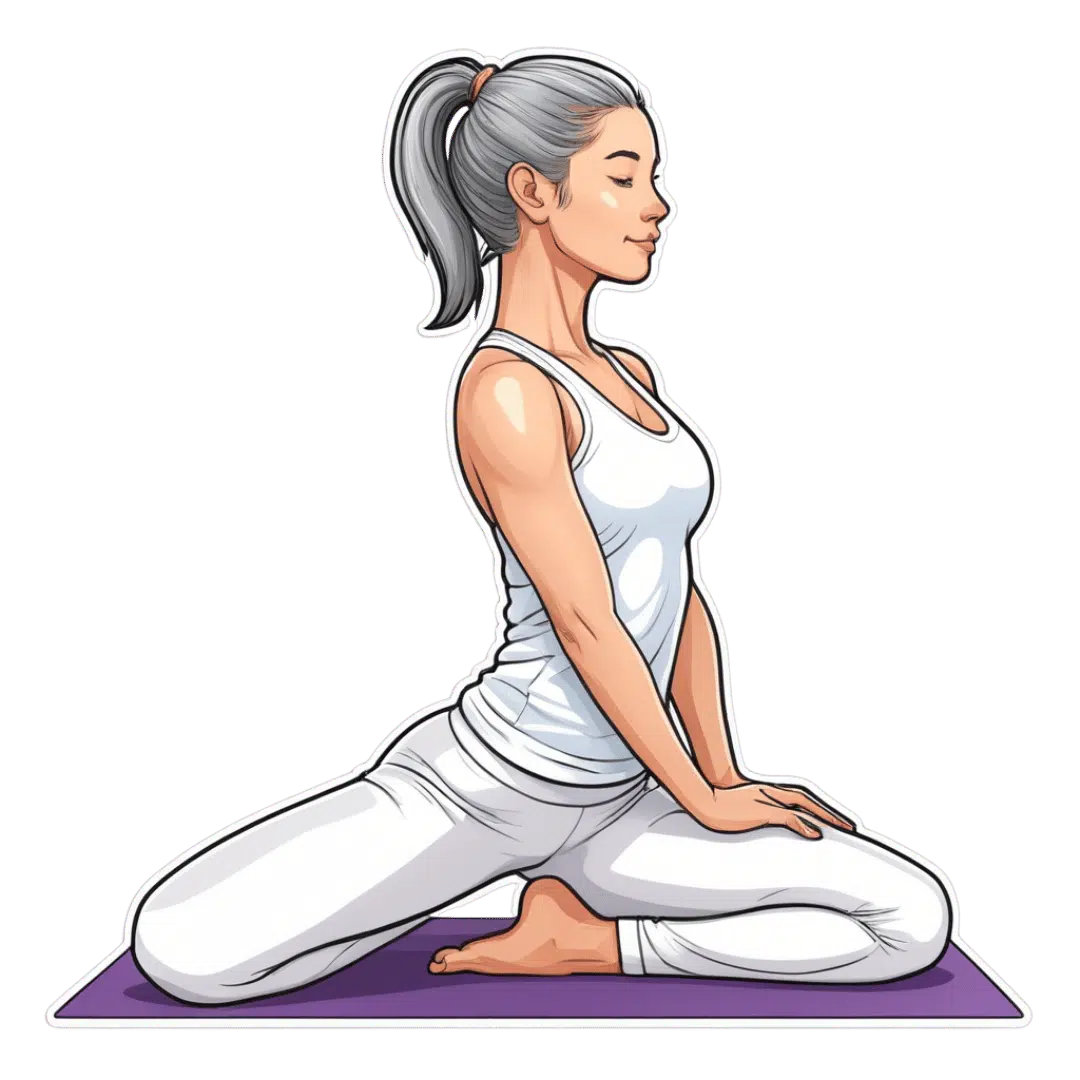
How to Sit On Your Heels (Seiza For Everyone)
10almonds is reader-supported. We may, at no cost to you, receive a portion of sales if you purchase a product through a link in this article.

When it comes to ways to sit that aren’t so bad for your health, seiza (the traditional Japanese seated position, as shown in the video thumbnail) is not a bad one. However, for people unaccustomed to it, it can be challenging at first.
Here’s how to get there:
One part at a time
As with Asian squats, Slav squats, resting squats, sitting squats, deep squats, or whatever else we want to call them today… Comfort (or difficulty) with seiza isn’t about ethnicity or genetics—it reflects joint mobility and muscle conditioning. And no, it’s not too late! You didn’t have to be doing this from babyhood to get comfortable with it.
If you can get into seiza already, then simply gradually building up how long you sit that way is one way to progress.
However, if you can’t get into seiza already, and/or just want to get to the point of being comfortable with it more quickly, then here are some mobility drills that will make the process a lot quicker and easier:
- Partial seiza on hands and knees: start on your hands and knees, then slowly lower yourself towards your heels, noting the point (and location) at which discomfort arises. Use this as a daily drill to build comfort and increase range over time, backing off whenever pain increases.
- Glute activation from a couch: sit in seiza on a couch (facing the couch while you do it, so your feet are over the edge. so there will be little or no pressure on your ankles, depending on your position). Slowly lower your hips while squeezing your glutes. This trains your glutes and hamstrings to support your descent, reducing strain on your knees and quads.
- Quad strengthening with eccentric control: using a couch for support, press the tops of your feet down while slowly lowering your body. Focus on slow, controlled eccentric contraction of the quads. Aim for 5–10 reps and adjust range as needed.
- Top-of-foot and shin engagement for plantar flexion: with each ankle as flat as possible, press your toes upward against your hand. This strengthens underused muscles on the top of your foot and shin, improving ankle mobility for seiza.
- Inner thigh engagement with yoga block: place a yoga block (or even gentler: a cushion) between your knees and gently squeeze for 30–60 seconds. This targets inner thigh muscles, helping you bring your knees closer together more comfortably in seiza.
If you do these often for a while, you’ll be sitting in seiza comfortable in no time.
Writer’s bonus tip: a lot of people unused to seiza alleviate discomfort in their knees and/or ankles by leaning forwards and taking some weight on their hands. This is usually done with terrible posture and is ruining the back. So, if you get the urge to do that, then: 1) don’t 2) if you really want to lean forward, then instead of using your hands against the floor, rest your forearms against the floor instead. Doing this will naturally align your spine healthily, like most versions of the “Child’s pose” in yoga.
One last note: if you have a health condition pertaining to one or more of the following: ankles, knees, spine, circulation, then please do speak with a physiotherapist first, to see if any modifications are sensible/needed in your case. Done right, seiza should promote good health in all of those things, but if you already have a problem there before starting, you could inadvertently make something worse.
For more on all of this plus visual demonstrations, enjoy:
Click Here If The Embedded Video Doesn’t Load Automatically!
Want to learn more?
You might also like:
Take care!
Don’t Forget…
Did you arrive here from our newsletter? Don’t forget to return to the email to continue learning!

Learn to Age Gracefully
Join the 98k+ American women taking control of their health & aging with our 100% free (and fun!) daily emails: